

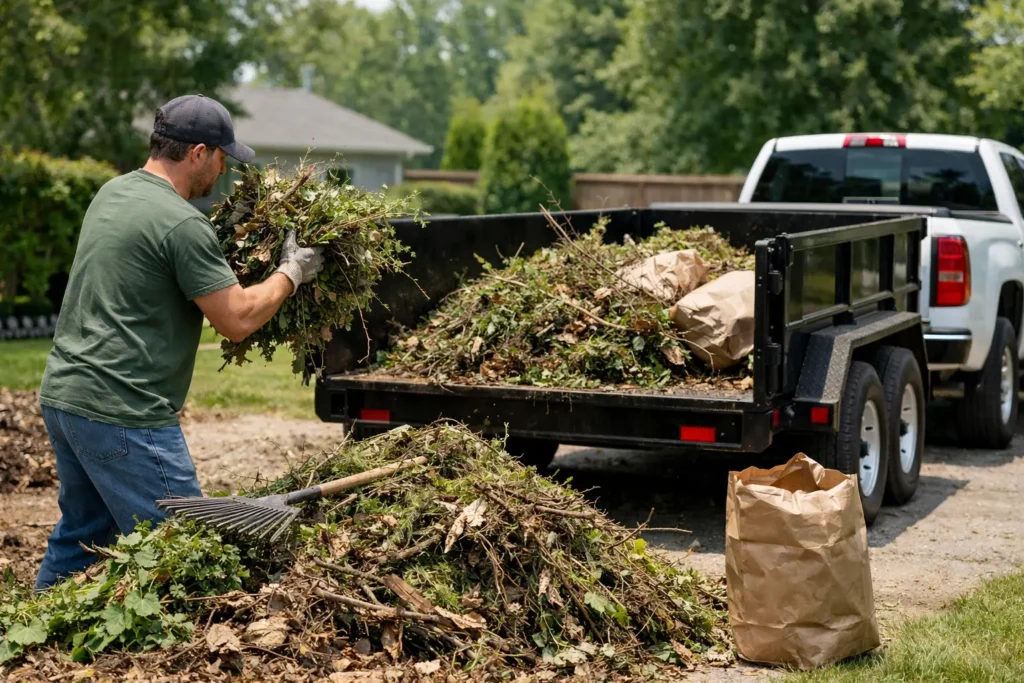
A fallen limb across the driveway, brush piled along a fence line, and six bags of leaves by the curb can turn a finished yard project into one more thing hanging over your weekend. A yard waste pickup service gives homeowners, landlords, and property managers a practical way to get that material loaded, hauled, and out of the way without making repeated trips or trying to fit it into a household trash cart.
For contractors, the same problem shows up at a different scale. A crew may be ready to start a fence, repair exterior damage, or finish landscaping, but the work area is still blocked by storm debris, old brush piles, and cut limbs. Clearing the site first keeps people from working around the mess and helps the next trade get in without delay.
When Yard Waste Pickup Makes Sense
Yard waste does not have to cover an entire acre to be worth hauling. The decision usually comes down to volume, weight, access, and time. A few small bags may be manageable through local collection rules if your address is eligible. A pile of limbs, dense brush, or wet leaves is a different situation. Wet organic material gets heavy fast, and a pickup bed fills up sooner than most people expect.
Pickup is especially useful after a storm, seasonal pruning, a property turnover, or a landscaping project that left more debris than the original plan accounted for. It can also make sense before listing a home, after a tenant move-out, or when an inherited property needs to look manageable again. The goal is not just a cleaner view from the street. It is restoring usable space.
For rental homes and commercial properties, timing matters. Brush stacked near a parking area, entry path, or dumpster enclosure can create a bad first impression and make routine maintenance harder. Getting it cleared before it becomes a larger eyesore is usually the better call.
What a Yard Waste Pickup Service Can Handle
Every load is different, so the materials should be discussed when requesting a quote. In most cleanup situations, pickup can include branches, brush, leaf bags, pine straw, small logs, clippings, and storm debris that has already been brought to a reachable area.
The key word is reachable. Material piled near the curb, driveway, garage, side gate, or accessible backyard is generally faster to load than debris spread across a wooded lot. If the crew has to carry brush uphill, navigate a narrow gate, or move material from several corners of the property, that affects the labor involved. It does not mean the job cannot be handled. It just needs to be described clearly upfront.
Large limbs can be awkward even when they are not especially heavy. Long branches catch on fences, shrubs, gutters, and vehicles during loading. Cutting them down into manageable lengths before pickup can help, but it is not always necessary. A good crew will assess the pile and plan the safest way to get it loaded without creating more damage around it.
Dirt, rocks, concrete, and mixed construction material are different from ordinary vegetative debris. They often change the weight, disposal plan, and equipment needed. If your pile includes more than leaves and brush, say so before scheduling. Clear details keep the estimate accurate and prevent a crew from showing up to surprises.
The Details That Make Pickup Go Smoothly
A quick look at the work area can save time on removal day. You do not need to make the pile perfect, but a little preparation helps the job move faster and keeps the property protected.
Start by separating obvious non-yard material from the brush and leaf piles. Old fencing, landscape timbers, pots, wire, plastic edging, furniture, and renovation debris may need to be handled differently. A mixed pile is common, especially after storms or property cleanouts, but the crew needs to know what is in it.
Next, make a path. Move cars away from the loading area when possible and leave access through gates unlocked. If there are sprinkler heads, low landscape lights, soft ground, or a section of fence that needs special care, point it out. Field crews appreciate a quick heads-up. It is easier to protect a problem area before loading starts than to discover it halfway through a carry-out.
Photos are useful when requesting service. Take one wide shot that shows the pile in relation to the house, driveway, or gate, then add closer photos that show the material and amount. Include the largest limbs or logs in the pictures. This gives the hauling company a real view of the job instead of forcing everyone to guess from a short description.
Do Not Wait for the Pile to Grow
There is a point where waiting makes cleanup harder. Loose branches blow across the yard. Leaf bags tear open in the rain. Brush piles become a place where pests and snakes can hide. At rental properties, debris left too long can become part of a tenant dispute or a code concern.
A smaller pickup scheduled at the right time can keep a property from reaching that point. This is also true for contractors. Removing job-site waste in stages often keeps access open and gives the crew more room to work safely. One call at the right point in the project is usually easier than trying to clear every leftover material on the final day.
What Affects the Cost of Yard Waste Removal
Straightforward pricing starts with understanding the actual work. The amount of material matters, but it is not the only factor. Volume, weight, loading distance, access, labor, and the mix of debris all affect the scope of a pickup.
A neatly stacked brush pile beside a driveway is a different job from loose storm debris scattered behind a home with a steep backyard. Both can be cleared, but the second job takes more carrying, more time, and sometimes additional equipment. Honest estimates account for that instead of treating every pile like it is the same.
Ask whether the quote includes loading, hauling, and disposal. You should also be clear about whether you want material taken from one pile or gathered from around the property. Those are two different levels of labor. The best approach is simple: send photos, explain access, identify mixed materials, and get the scope confirmed before the work is booked.
That is how Drop Zone CleanUp approaches cleanup work across Northeast Georgia. The focus is clear communication, a crew that shows up prepared, and an all-in plan for getting the material off the property without dragging the process out.
Yard Waste Pickup After Storms and Property Turnovers
Storm cleanup is where yard debris gets complicated quickly. A few branches may be easy to drag aside, but a yard full of downed limbs can block driveways, cover outdoor equipment, and bury walkways. Homeowners may need the space cleared so they can assess the rest of the property. Property managers may need it handled before a vendor, inspector, or incoming tenant arrives.
The smart move is to prioritize access first. Clear the driveway, entry route, and areas around vehicles, outdoor units, gates, and work zones. Then deal with the piles farther out in the yard. This keeps the property functional while the larger cleanup is underway.
During a turnover, yard waste removal can be part of a wider reset. Overgrown brush, abandoned outdoor items, damaged patio furniture, and old landscape material often show up together. Handling the debris in one coordinated cleanup keeps the property from sitting in limbo between occupants.
Choosing a Crew You Can Count On
A yard waste pickup service is not complicated in theory. In practice, it still requires a crew that communicates, arrives when scheduled, and works carefully around the property. That matters when the pile is beside a new fence, near a landscaped bed, or behind an occupied rental home.
Look for a licensed and insured local operator that asks useful questions before quoting the work. You should not have to chase down basic information, wonder whether the crew is coming, or sort out surprise charges after the truck is loaded. Good hauling work is direct: confirm the scope, arrive ready, load safely, clean up the work area, and move on.
If the debris is taking up space, blocking the next job, or making a property look neglected, get it handled while it is still a straightforward pile. Clear ground gives you room to work, room to park, and one less unfinished task waiting outside.