

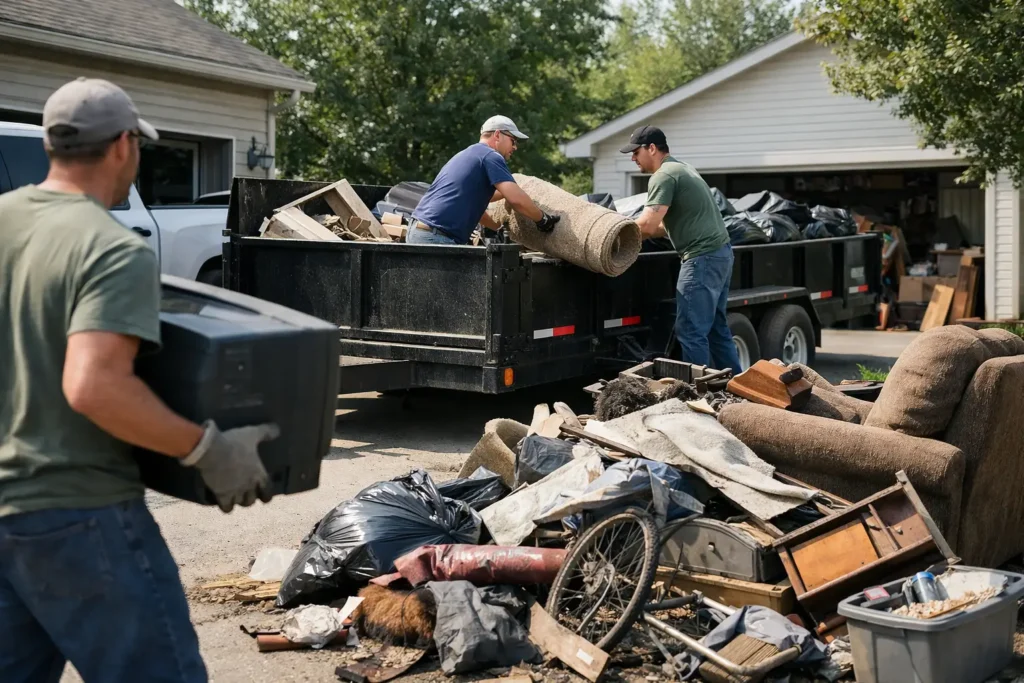
That old sectional on the porch, the busted water heater in the garage, the pile of lumber behind the shed – most people don’t call until the mess starts slowing down a move, remodel, or property turnover. If you’re asking what can junk haulers take, the short answer is a lot more than most people think. The real answer depends on the material, the size of the load, and whether the items can be handled, loaded, and disposed of legally and safely.
For homeowners, that usually means bulky household junk, furniture, appliances, yard debris, and general clutter. For contractors and property managers, it can also mean renovation debris, flooring, cabinets, fencing, and cleanup from tenant move-outs. The easiest way to think about it is this: if it’s non-hazardous, physically removable, and part of a normal cleanout or debris hauling job, there’s a good chance a junk hauling crew can take it.
What can junk haulers take on a typical job?
On most jobs, junk haulers handle the stuff that won’t fit in a trash can and shouldn’t sit around another week. Furniture is one of the most common categories. Couches, recliners, dressers, mattresses, bed frames, dining tables, desks, bookshelves, and patio furniture are standard haul-away items. When people move, downsize, or clean out an estate, this is usually where the volume adds up fast.
Appliances are another common one. Washers, dryers, refrigerators, freezers, dishwashers, ovens, microwaves, and water heaters often get picked up during cleanouts or renovation work. Some appliances need special disposal steps because of refrigerants or metal recycling requirements, so acceptance can depend on what the unit is and where it’s going after pickup.
General household junk is usually fair game too. Think boxes of unwanted items, toys, clothes, small exercise equipment, lamps, shelving, storage bins, and garage clutter. If a crew is doing a full-property cleanout, they’re often removing a mix of small loose items and larger bulky pieces in the same load.
Then there’s construction and renovation debris. This is where a lot of people assume junk haulers stop, but many crews regularly remove material from active jobs and post-renovation cleanups. That can include drywall, lumber, trim, old cabinets, doors, flooring, fencing, deck boards, tile, carpet, and demolition debris from smaller tear-outs. If you’ve got a bathroom remodel underway or just finished pulling out a kitchen, this type of debris is often exactly what a hauling crew is there for.
What can junk haulers take from outside the house?
Plenty. Outdoor cleanup calls are common, especially after storms, landscaping work, or long-delayed property maintenance.
Yard waste is usually accepted if it’s part of a standard debris removal job. That includes bagged leaves, brush, branches, shrubs, pulled fencing, stacked limbs, and other green waste. Piles of debris from shed cleanouts or backyard projects often get combined with yard material in the same pickup.
Heavier outdoor items can also be hauled off, but this is where the job starts to depend on access and weight. Old swing sets, broken sheds, hot tubs, playsets, grills, patio sets, and sections of fencing are all common. Some items need to be broken down first. A hot tub, for example, usually isn’t a simple pickup. It’s often a removal job, which means disconnecting, cutting down sections, and loading it out safely.
Concrete, brick, block, and dirt are a different conversation. Some junk haulers take them, some don’t, and even when they do, load limits matter. Heavy debris adds up quickly and may require equipment, multiple trips, or a different hauling plan than a standard household junk job.
The jobs where “it depends” really matters
The phrase “what can junk haulers take” sounds simple until the material gets awkward, oversized, or unusually heavy. That’s where experience matters.
A piano is a good example. Yes, many junk haulers will remove one. But not every piano removal is equal. A ground-level upright with a straight path out is one thing. A baby grand buried in a finished basement with tight turns is another. Same item, completely different labor and risk.
Mattresses are another item people assume are automatic. They usually can be taken, but local disposal rules and recycling access can affect how they’re handled. The same goes for old TVs, computer equipment, and certain electronics. A hauling crew may accept them, but they often need to be separated and routed differently from general junk.
Jobsite debris has its own trade-offs too. Loose lumber, busted drywall, tile, and insulation from a light demo project are pretty standard. But if the material is mixed with prohibited waste, buried under unsafe conditions, or located in a hard-to-access area, the scope changes. A good crew will tell you that upfront instead of showing up and figuring it out in your driveway.
Items that often require special handling
Some items are accepted, but they’re not simple toss-and-go loads. Refrigerators and freezers may need refrigerant handling. Tires are another item that many disposal sites treat separately. Paint can go either way depending on whether it’s fully dried out, how much there is, and local disposal rules.
Large exercise equipment, gun safes, pool tables, and commercial fixtures can also fall into this category. They may be removable, but they can require extra labor, disassembly, or more than one crew member to move safely. If a property manager is clearing out a tenant space or a contractor is wrapping up a buildout, these are the kinds of things worth mentioning before the appointment.
That heads-up saves time. It also helps avoid the kind of pricing confusion that starts when somebody says “just a few items” and one of them turns out to be a 900-pound safe.
What junk haulers usually will not take
Most professional junk haulers stay in the lane of non-hazardous material. If something presents a disposal, safety, or environmental issue beyond standard hauling, it usually needs a different type of service.
That often includes chemicals, fuels, solvents, pesticides, propane tanks in certain conditions, and other materials that can’t go through regular disposal channels. Anything unsafe to transport in a normal junk load is a red flag. If you’re not sure about an item, ask before the crew is onsite.
This is also why photos help. A quick set of pictures can tell a hauling company whether they’re looking at a normal garage cleanout, a pile of renovation debris, or material that needs a different disposal path.
How to know if your load is a fit
The easiest way to tell whether junk haulers can take your stuff is to group it by type instead of just saying “trash.” That one word covers everything from bagged clutter to demo debris to old appliances. The more specific you are, the faster you’ll get a real answer.
A homeowner might say they have a sofa, two mattresses, a washer, and garage junk. A contractor might say there’s a pile of drywall, flooring, baseboard, and cabinets from a remodel. A property manager might be dealing with furniture, bagged trash, and leftover tenant belongings after a move-out. Those descriptions tell a crew what kind of truck space, labor, and disposal plan the job will need.
Access matters too. Curbside pickup is different from a third-floor apartment with no elevator. A clean stack of lumber beside the driveway is different from wet debris scattered across a backyard slope. Same material, different job.
If you’re in Winder or nearby parts of Northeast Georgia, that local piece matters more than people realize. Disposal options, travel time, and site access can all affect what makes sense for one load versus another. A crew that does this work every day should be able to tell you quickly what fits, what needs special handling, and what needs a different plan.
A better question than what can junk haulers take
Sometimes the better question is not what can junk haulers take, but what problem are you trying to clear. Are you opening up space in a garage? Turning a rental after an eviction? Keeping a remodel from getting buried in debris? Finishing a property cleanup before listing photos? The answer helps shape the job.
That’s how experienced crews look at it. Not just item by item, but in terms of what needs to happen to get the property or project moving again. At Drop Zone CleanUp, that usually means showing up with a clear plan, loading what was agreed to, and getting the mess out of the way without turning it into a bigger production than it needs to be.
If you’re unsure about an item, ask early and be specific. A few photos and a straight description will usually tell you more than a generic price hunt ever will. The goal is simple – get the pile gone, keep the job moving, and don’t create new problems on the way out.