

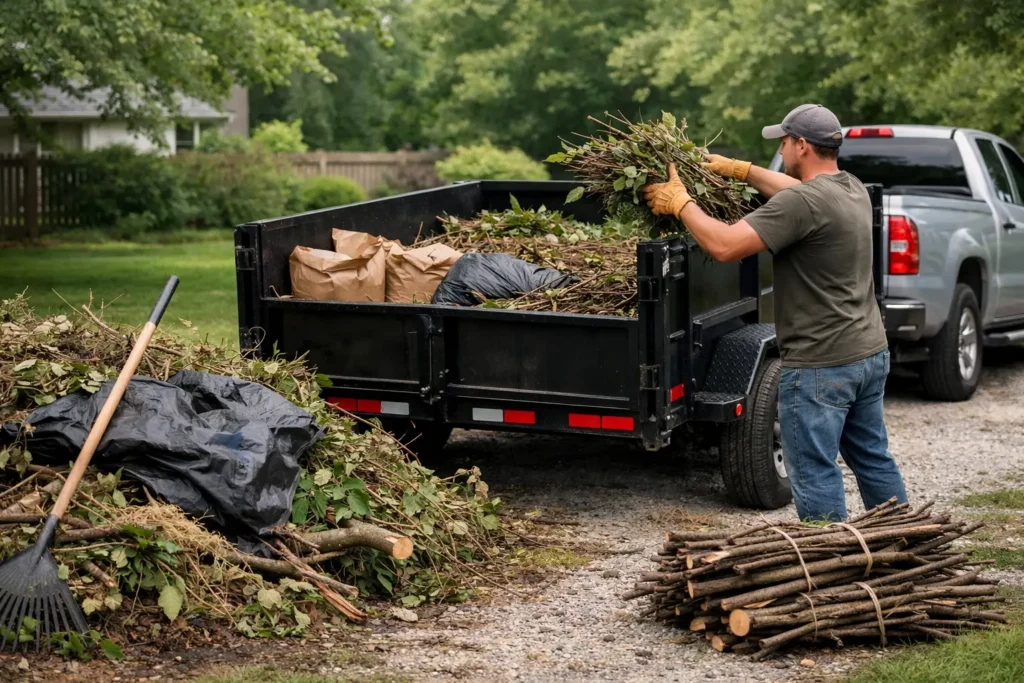
A weekend of trimming can turn a clean yard into a curbside pile fast. Add a storm, a rental turnover, or a landscaping project, and the question becomes more than where to put a few bags. Knowing how to dispose of yard debris properly keeps driveways clear, prevents damage to your lawn, and avoids leaving a pile that sits for weeks.
The right route depends on what is in the pile, how much there is, and what your local collection rules allow. A few bags of leaves are one thing. A pickup-load of limbs mixed with old fence boards, dirt, and landscaping material is another.
Start by separating the debris
The fastest way to make yard cleanup harder is to throw everything into one heap. Before hauling, bagging, or setting material at the curb, sort it into basic groups. This saves time later and keeps organic material from getting mixed with items that require a different disposal route.
Keep leaves, grass clippings, pine straw, small plants, and loose brush together. Put larger limbs and cut branches in a separate pile. If you have wood chips or clean mulch, keep those separate too, since they may be useful on site.
Then pull out anything that is not natural vegetation. Landscaping projects often produce mixed debris: plastic edging, empty pots, torn weed barrier, concrete chunks, brick, metal stakes, old timbers, or broken irrigation parts. Those items should not go into a green-waste pile. The same goes for painted, stained, or treated wood. A clean brush load is easier to handle than a pile that has to be sorted at the disposal site.
For contractors and property managers, this step matters even more. A crew clearing a lot after a renovation or tenant move-out can lose half a day dealing with a mixed pile that could have been staged correctly from the start.
Use the disposal option that fits the volume
There is no single best answer for every yard. The practical choice comes down to volume, material type, available space, and how quickly the area needs to be cleared.
Compost small, clean material when it makes sense
Leaves, grass clippings, small weeds, and plant trimmings can be composted if you have room and will actually maintain the pile. This works well for steady, manageable amounts of material. It does not work as well for a major storm cleanup or a property with no place to keep a compost area.
Avoid adding diseased plants or weeds that have already gone to seed unless you know your compost system gets hot enough to break them down. Otherwise, you may spread the same problem back through the yard later.
Grass clippings can also be left on the lawn after routine mowing when they are not thick enough to smother the grass. That is often the simplest option. After a heavy cut, though, clumps can block sunlight and leave the lawn looking worse than before.
Reuse brush and chips on the property
Small branches can be chipped and used as mulch around trees and natural areas. Clean wood chips help control weeds and hold moisture in the soil. They are useful, but only when spread properly. A thick pile against a tree trunk can trap moisture and create problems, so keep mulch pulled back from the base.
Brush can also be placed in a designated natural area on larger properties, where allowed. That is not a good fit for every neighborhood or rental property. It can attract pests, look neglected, and become a problem when a property needs to be shown, inspected, or turned over quickly.
Follow local curbside collection rules
Many cities and counties offer some form of yard-waste pickup, but the details vary. Some require paper yard bags. Others allow containers, set limits on branch length, or only collect debris on certain days. A pile placed at the curb without checking the rules may stay there longer than expected.
Before setting material out, check your local collection requirements for bag type, bundle size, pickup dates, and whether branches must be tied. Do not assume regular household trash service will take loose brush or large limbs. In Northeast Georgia, collection rules can differ from one community to the next.
Keep piles clear of mailboxes, parked cars, utility boxes, and drains. A storm pile that slides into a ditch or blocks a drainage path can create a second cleanup job after the next rain.
Haul larger loads to an approved facility
A personal trailer or pickup can work for moderate loads if the material is clean, secured, and accepted at the destination. Cover loose material so leaves and pine straw do not blow down the road. Load branches with cut ends facing the same direction when possible. It makes unloading safer and keeps limbs from catching on everything nearby.
This option becomes less practical when the load includes long limbs, wet brush, root balls, or several trailer loads. Wet vegetation is heavier than it looks. What starts as a quick run can turn into multiple trips, cleanup at the truck, and a lot of time away from the rest of the job.
How to dispose of yard debris after a storm
Storm cleanup has its own problems. Fallen limbs are often tangled, muddy, and spread across fences, driveways, roofs, or landscaping beds. The priority is access and safety, not making a perfectly neat pile on the first pass.
Start by clearing paths to doors, driveways, and vehicles. Move smaller loose debris to one staging area, but do not stack brush against the house, fence, or utility equipment. If a limb is caught in a structure or near power equipment, leave that situation to the appropriate utility or qualified professional.
Once access is clear, separate clean vegetative debris from mixed storm damage. A limb pile may also contain damaged outdoor furniture, fence sections, shingles, or other materials that need different handling. Keeping those items apart prevents delays when the load is removed.
For larger storm piles, equipment and crew size matter. A few wheelbarrow loads can be handled by a homeowner. A yard full of heavy limbs may require loading help and hauling capacity that makes the job move faster without tearing up the lawn or blocking the street for days.
Avoid the common shortcuts
Burning, burying, and dumping may seem like easy answers, but they often create more trouble than they solve. Burning rules can be seasonal and location-specific, and smoke does not stay on your property. Burying large amounts of vegetation can lead to settling and poor drainage. Dumping on vacant land, behind a commercial building, or along a roadside is illegal and creates problems for the property owner.
Another common mistake is overfilling bags. A bag packed with wet leaves or grass may rip before it reaches the curb. Use manageable loads, and do not mix branches with bagged material unless local rules specifically allow it.
Do not let a brush pile sit directly on healthy turf for long. The grass underneath will die off, and the pile can become a home for insects and small animals. If removal is not happening right away, stage debris on a driveway, tarp, or another hard surface when possible.
When it is time to bring in a hauling crew
Yard debris removal is worth outsourcing when the pile is too large for your vehicle, mixed with other cleanup material, or holding up the next phase of work. This comes up often after storms, major pruning, landscaping changes, rental property cleanouts, and construction projects where the crew needs its staging area back.
A professional hauling crew can load brush, limbs, bagged yard waste, and related non-organic debris from the same project, then clear the area so the property is usable again. The key is being clear about what is in the pile before scheduling. A clean vegetation load is different from a mixed cleanup job, and good communication keeps the work moving without surprises.
For homeowners, that may mean getting the driveway back before guests arrive or before a weekend project starts. For contractors and property managers, it means clearing the obstacle so the next crew can get in, materials can be delivered, and the job does not stall over a pile of debris.
Drop Zone CleanUp handles yard and storm debris removal across Winder and Northeast Georgia with the same practical approach used on active cleanup jobs: assess the pile, load it safely, and get the space cleared.
A yard does not need to look perfect while work is underway. It does need a plan. Sort the material early, use the disposal route that fits the load, and do not let a temporary brush pile become the next thing on your to-do list.