

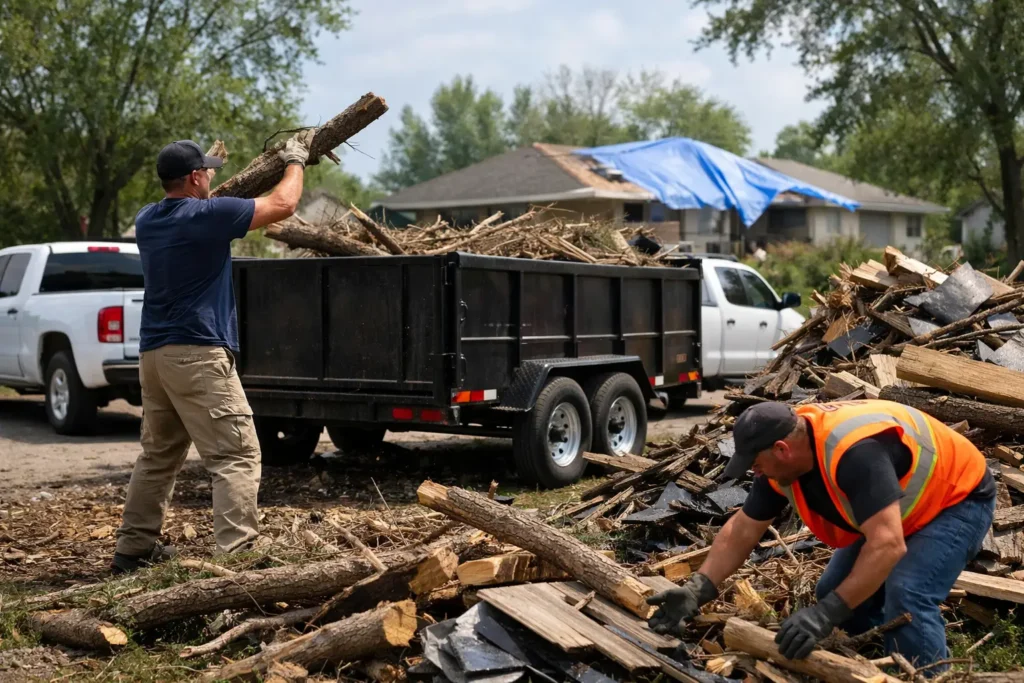
The morning after a hard storm usually looks worse in daylight. Fences are down, limbs are piled across the yard, soaked drywall is stacked in the garage, and the curb starts filling up fast. That is when a storm debris removal company stops being a nice idea and becomes the crew that helps you get control of the property again.
Storm cleanup is not just about hauling junk away. It is about clearing access, reducing risk, and keeping the next step moving, whether that means insurance inspections, repairs, tenant turnover, or getting a job site back in working shape. If the cleanup drags, everything behind it drags too.
What a storm debris removal company actually handles
After a storm, debris usually comes in layers. The first layer is obvious – branches, fencing, yard waste, blown-over outdoor furniture, and scattered material around the property. The second layer is what creates bottlenecks – damaged shed contents, ruined flooring, wet carpet, busted drywall, and bulky items that need to get out before repairs can begin.
A good storm debris removal company handles both. That matters because many properties are not dealing with one clean pile at the curb. They are dealing with debris in the backyard, side yard, driveway, garage, and sometimes inside the structure too. The job goes smoother when one crew can load, haul, and clean up without turning it into three separate appointments.
For contractors and property managers, this gets even more practical. Storm debris on a property is not just ugly. It blocks trades, slows inspections, creates liability issues, and eats up labor your crew should be using somewhere else. If your guys are spending half a day dragging soaked material and broken fence sections to the front, the actual repair work is already behind.
Why fast cleanup matters more than most people think
A lot of property owners focus on visible damage first, which makes sense. But debris sitting too long creates its own problems. Wet material gets heavier. Piles settle into the ground. Broken wood with exposed fasteners becomes a safety issue. Access to driveways, walkways, and work areas gets tighter every day the mess stays put.
There is also the simple fact that storm cleanup gets harder once everyone waits. Right after a major weather event, hauling crews, repair crews, and disposal sites all get busier. If you know debris has to go, getting on the schedule early can save a lot of frustration.
That does not mean every property needs the same response. A homeowner with limbs and fence panels in the yard needs one kind of help. A rental property with damaged contents, exterior debris, and a deadline for turnover needs another. The point is to match the cleanup plan to the real condition of the site, not treat every storm job the same.
How to tell if a company is built for storm cleanup
Some hauling companies are fine for a single couch or a garage cleanout, but storm work is different. It is usually messier, less predictable, and more time-sensitive. You want a company that can look at a mixed debris situation and quickly figure out how to clear it without creating more problems.
The first thing to look for is communication. If you cannot get a straight answer on timing, what they take, or how pricing works, that usually does not improve once the job starts. Storm cleanup already comes with enough moving parts. You do not need vague scheduling on top of it.
The second thing is whether they are set up for real field work. Licensed and insured matters. So does having the right crew size and equipment for the job. A few scattered branches are one thing. A property with fence sections, yard waste, damaged furniture, construction material, and soaked interior debris is another.
The third thing is whether they understand access and workflow. On a storm job, the best crews do not just throw things in a trailer. They think about what needs to be cleared first, how to protect the property while loading, and how to keep the site workable for whoever comes next.
Storm debris removal company pricing should be clear
Nobody likes guessing what the final bill will be, especially when a storm has already created enough surprise costs. A professional storm debris removal company should be able to explain pricing in plain language. That might be based on volume, labor, loading difficulty, or the type of debris involved, but it should not feel like a moving target.
Storm jobs can vary a lot. A neat pile at the curb is not the same as debris spread across a wet backyard with limited access. Material inside a home or outbuilding is different from loose brush at the edge of the driveway. That is normal. What matters is that the company explains those factors up front so you know what is driving the cost.
For contractors and property managers, this is even more important. You need to know whether the hauling company can quote accurately, stick to scope, and communicate if the site conditions change. That is how you keep your own customer informed and your schedule intact.
What homeowners should expect during storm cleanup
For homeowners, the biggest concern is usually getting the property back to usable condition without turning the cleanup into another headache. A reliable crew should be able to walk the site, identify what is going, and handle the loading without a lot of back-and-forth.
That includes being careful around driveways, lawns, gates, and structures during removal. Storm debris is awkward. Wet items are heavy. Broken material has sharp edges and hidden nails. This is not the kind of job where sloppy handling stays hidden.
It also helps when one company can remove more than just yard debris. A lot of storm cleanup jobs involve ruined furniture, damaged storage items, soaked carpet, busted shelving, and other bulky material that homeowners do not want to wrestle out on their own. One crew handling the full load is usually faster and less stressful.
What contractors and property managers need from a hauling partner
If you manage properties or run jobs, you are not looking for a sales pitch. You need a crew that shows up, clears the mess, and lets the next task happen. That means dependable arrival windows, realistic scope, and no confusion about what is being removed.
Storm cleanup often hits at the worst time. Occupied rental properties need quick turnaround. Vacant units need to be made ready. Active jobs need access restored so framing, repairs, or material deliveries can continue. In those cases, the hauling company is not just taking debris away. They are removing friction from the whole job.
This is where local operators tend to stand out. They understand how weather hits Northeast Georgia properties, how access can vary from neighborhood lots to rural drives, and how to communicate like people who actually work in the field. Drop Zone CleanUp fits that lane well – direct, practical, and built around getting the site cleared without drama.
Questions worth asking before you book
You do not need a long checklist, but a few questions can save time. Ask what types of storm debris they handle. Ask how pricing is structured. Ask when they can schedule the work and whether they need everything piled in one place or can remove debris from multiple areas of the property.
If you are managing a more complex site, ask how they deal with mixed loads and limited access. That answer tells you a lot. An experienced crew will usually talk through the property layout, loading conditions, and the order they would clear things. That kind of response is a good sign they have done this before.
When it makes sense to bring in a pro
Not every storm mess requires outside help. A few small branches and light yard cleanup may be manageable on your own. But once the debris is bulky, soaked, scattered, sharp, or spread across multiple areas, the job changes. It becomes less about a weekend cleanup and more about labor, hauling logistics, and getting the property safe and usable again.
That is usually the point where professional removal saves time and wear on everybody involved. You get a clear-out plan, a crew that can do the heavy lifting, and a property that is ready for the next step instead of stuck in limbo.
After a storm, the cleanup phase sets the tone for everything that follows. If the debris is handled quickly and properly, repairs move faster, the property is safer, and you are not wasting days working around a mess that should already be gone.