

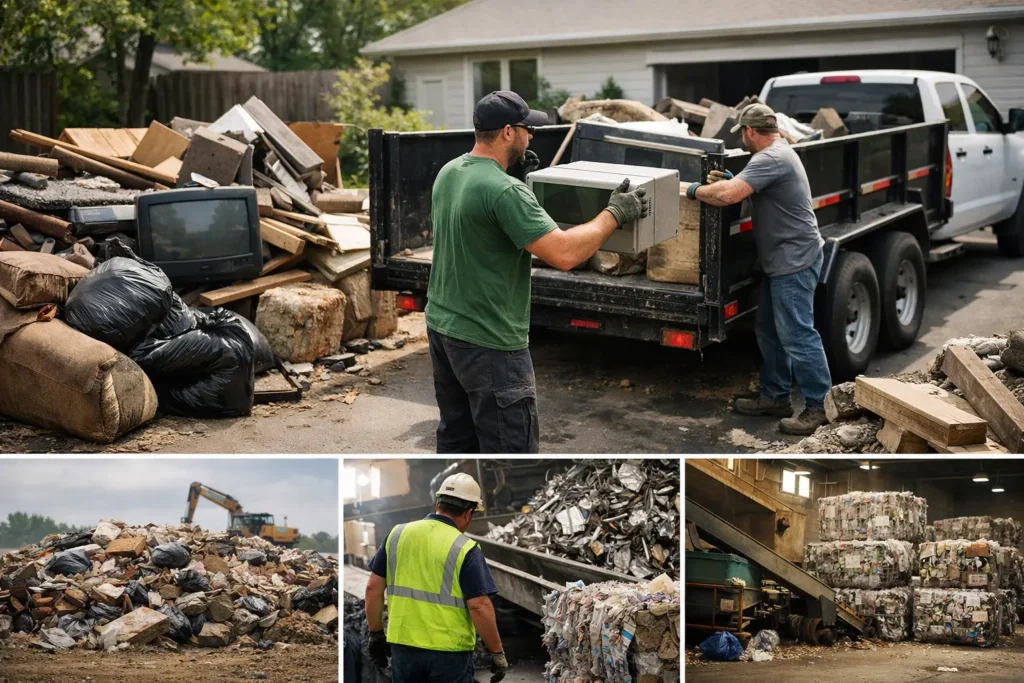
You see the truck pull away, the pile is gone, and one question usually follows right after: what does junk removal do with the junk? Fair question. Most people know the stuff leaves their house, rental, office, or job site. What they do not always know is that it does not all go to one place.
A good junk removal crew sorts based on what the material is, what condition it is in, and what local disposal options make sense. Some items can be recycled. Some can be donated if they are still usable. Some go to a transfer station or landfill because there is just no second life left in them. The real answer depends on the load.
What does junk removal do with the junk on a real job?
On a real pickup, the truck usually has a mixed load. You might have an old couch, busted shelving, yard debris, bagged trash, a broken washing machine, and renovation debris all in one stop. That load is not handled the same way across the board.
The first step is usually separating what can reasonably be kept out of the landfill. Metal is one of the easiest examples. Appliances, bed frames, old grills, shelving, and scrap pieces from a cleanup often get pulled aside for metal recycling. Cardboard may be separated if it is clean and dry. Some electronics may need to go through specific disposal channels depending on the area and the item.
Then there is the middle category: items that are still usable. Furniture, tools, home goods, or decor in decent shape may be candidates for donation. That said, usable does not mean perfect in your eyes. It means clean enough, functional enough, and accepted by the receiving organization. A stained mattress on a curb is not a donation item. Neither is a particle board dresser that is already coming apart.
Everything else gets disposed of through the appropriate local facility. That usually means a transfer station, landfill, or another approved disposal site based on the material. It is not glamorous, but it is the honest part of the business. A lot of junk is just at the end of the line.
Why sorting matters more than people think
If you have only ever put one bag at the curb each week, it is easy to assume junk hauling is just bigger trash service. It is not. Bulk removal jobs can involve far more material types, and each one has different rules, costs, and handling needs.
For example, a garage cleanout may include paint cans with dried residue, old bikes, busted storage bins, scrap lumber, holiday decorations, and a freezer that quit years ago. A rental property cleanout may have mattresses, clothing, food waste, broken furniture, and loose debris all mixed together. A construction cleanup can include wood, drywall, concrete chunks, tile, cabinets, and packaging material.
That is why professional junk removal is not only about lifting heavy stuff. It is also about knowing how to separate the load and where it can legally and practically go. On larger cleanouts, especially after an eviction, estate turnover, or renovation, that sorting process is what keeps the job moving.
What usually gets recycled
Recycling is one of the first places a crew looks when materials have value or there is a clear recycling stream for them. Metal is the most common example because scrap yards and recycling centers often accept it in large quantities. Appliances, exercise equipment, metal fencing, pipes, wiring scrap, and steel bed frames often fall into that category.
Cardboard can also be recycled if it has not been soaked or contaminated. On job sites, packaging waste adds up fast, so separating cardboard and clean paper products can make sense. Certain plastics may be recyclable too, but that depends heavily on local rules and whether the material is clean enough to be accepted.
Electronics are a little more complicated. TVs, monitors, printers, and other e-waste often require separate handling. They are not standard household trash, and many disposal sites have rules about them. The same goes for appliances that contain components requiring proper processing.
Recycling sounds simple on paper, but in the field it comes down to volume, contamination, time, and local facility rules. A professional crew has to balance all of that without turning a straightforward pickup into a drawn-out sorting operation that stalls the day.
What gets donated, and what usually does not
People often hope everything removed from a home can be donated. Sometimes that happens. Often it does not.
Donation works best when items are still clean, functional, and worth placing back into use. That could include a solid wood table, chairs in good condition, dressers with working drawers, lamps, shelving, kitchenware, or basic household goods. If an item still has practical life left in it, there is a chance it can be routed that way.
But donation centers have standards. Upholstered furniture with stains or odors often gets rejected. Mattresses are tough in many areas. Broken furniture, damaged particle board, heavily worn rugs, and old pressboard cabinets usually are not good candidates. The same goes for anything moldy, pest-damaged, or unsafe.
This is where expectations matter. Homeowners sometimes feel bad throwing things away, especially after a move-out or estate cleanout. That is understandable. But a junk removal company cannot force a donation center to accept items that are no longer usable. The better move is being realistic about condition from the start.
What usually ends up in the landfill
A fair amount of junk is true end-of-life material. Think soaked carpet, broken recliners, torn box springs, mold-damaged furniture, shattered shelving, mixed trash, and renovation debris that has no practical reuse path. Once materials are contaminated, waterlogged, infested, or structurally shot, disposal is often the only option.
Construction debris is a good example of where people assume more gets reused than actually does. Clean concrete, metal, and sometimes wood may have recovery options. But mixed debris from demolition or remodel work usually contains fasteners, adhesives, dust, broken composites, and other contamination. That limits where it can go.
The same issue comes up with hoarder cleanouts and severe property cleanups. In those jobs, the volume is high and the material condition is often rough. Some items may be salvageable, but a lot of it is simply waste that needs to be loaded out and taken to the right disposal site.
Why one crew may handle junk differently than another
Not every junk removal company handles loads the same way. Some sort aggressively to recover recyclable material. Some focus on speed and route loads straight to disposal. Most fall somewhere in the middle and make practical decisions based on the job.
That is not always a bad thing. If a contractor has a job site piled with broken drywall, tile, and cut lumber, speed matters. They need the mess gone so the next trade can get in. On the other hand, if a homeowner has a clean garage full of old bikes, tools, and household items, there may be more opportunity to separate materials for recycling or donation.
What matters is that the company is handling the load responsibly, following local disposal rules, and being upfront about what is realistic. Good operators do not make feel-good promises they cannot actually keep.
What you can do before pickup
If you want more of your load kept out of the landfill, a little prep helps. Separate clearly reusable items from obvious trash. Set metal items together if possible. Keep important papers, family keepsakes, cash, and personal items out of the pile before the crew arrives. That is especially important on estate cleanouts, foreclosure turnovers, and eviction work where a lot of material may be removed fast.
If there is something you specifically want donated or something you know requires special handling, say it early. Waiting until the truck is half loaded is not the best time to mention that the old cedar chest belonged to your grandmother or that the electronics were supposed to be handled separately.
Clear communication makes the job cleaner. It also helps the crew quote the work more accurately and avoid delays once loading starts.
The short answer to what does junk removal do with the junk
It gets sorted, moved, and routed based on what it is and what shape it is in. Recyclable materials go where they can be processed. Usable items may be donated if they meet standards. The rest gets disposed of properly.
That may not sound exciting, but it is the real answer. Junk removal is part hauling, part sorting, and part logistics. When it is done right, the pile is gone, the property is usable again, and the next step can move forward without extra drama.
If you are hiring a crew, the best question is not just where the junk goes. It is whether the company handles the whole process in a way that is legal, practical, and honest about what can actually be saved.