

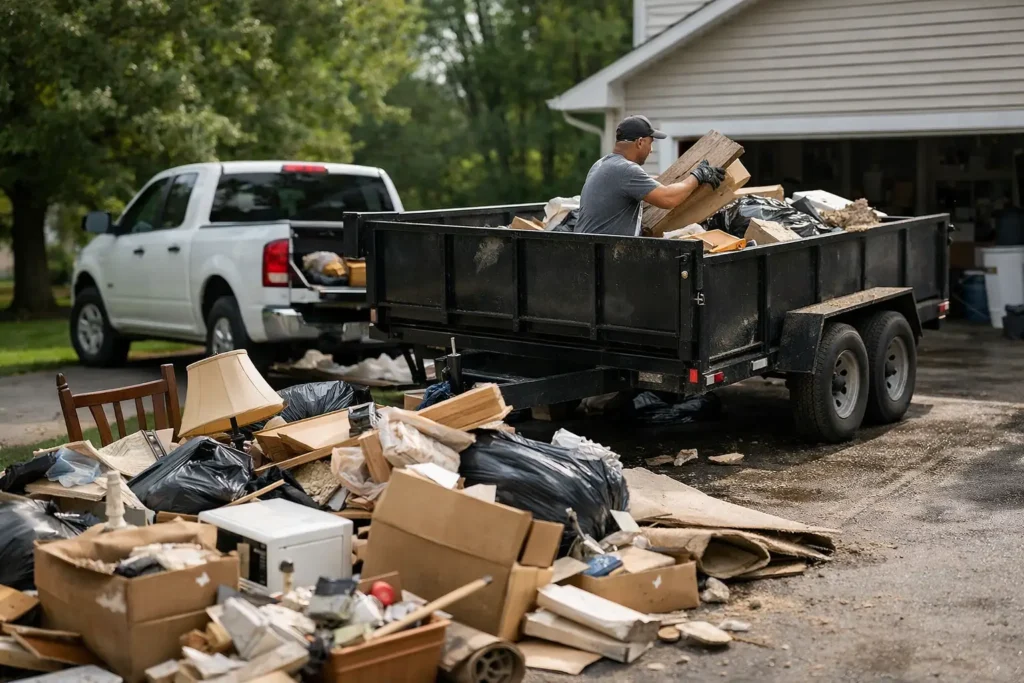
The garage starts with one broken chair. Then an old mattress gets leaned against the wall, paint cans get shoved into a corner, and before long you can’t park inside anymore. That is usually when people start looking for a residential junk removal guide – not because they want a perfect house, but because the mess is in the way.
Most junk removal jobs are less about trash and more about momentum. You are trying to clear a room before listing a house, finish a renovation, empty a rental, or just get your space back. The right plan keeps that job simple. The wrong plan turns it into three weekends of lifting heavy stuff, guessing what the dump will take, and making more trips than you expected.
What a residential junk removal guide should actually help you do
A good residential junk removal guide should answer one basic question: what needs to go, and what is the smartest way to get it out without slowing down the rest of your project?
That matters because not every cleanup is the same. Cleaning out a basement after years of buildup is different from hauling off a sectional sofa and two appliances. A move-out cleanout has a tighter timeline. An estate cleanout usually has more sorting and more decision-making. Storm debris is often bulky, wet, and spread across the property instead of piled neatly by the curb.
If you start by identifying the type of job, the next steps get easier. You can estimate labor, access, loading time, and whether the job is a quick pickup or a full property cleanout.
Start by sorting the job, not just the pile
Before you schedule anything, walk the property and separate the material into real categories. Furniture, appliances, household clutter, yard debris, renovation debris, and general trash all load differently. Some items are simple. Others take two people, dollies, disassembly, or a careful route through tight hallways.
This is where homeowners often save time by slowing down for ten minutes. If the crew arrives and everything is mixed together across four rooms, the job can still get done, but it usually takes longer than if the load is staged clearly. You do not need to make it look perfect. Just know what is staying, what is going, and what needs special handling because of weight or access.
Heavy pieces are the ones to flag early. Think upright pianos, old entertainment centers, sleeper sofas, waterlogged furniture, and appliances in narrow laundry rooms. Hot tubs and above-ground pool tear-outs are their own category too. Those jobs are not just haul-offs. They usually involve breakdown, cutting, or light demolition before removal starts.
Common residential jobs that need a different approach
A single-item pickup is mostly about access and speed. A garage cleanout is about volume. A whole-house cleanout is about sorting, load planning, and keeping the job organized. Renovation debris needs to be kept separate from household junk when possible because it stacks and loads differently.
That is why the best plan depends on the job in front of you, not just the total amount of stuff.
Decide whether this is a DIY haul or a crew job
Some junk removal is worth handling yourself. If you have a pickup, a small pile, and easy dump access, that may be the right move. But a lot of residential jobs get underestimated.
The first issue is time. Loading, tying down, driving, unloading, and making multiple disposal runs adds up fast. The second is damage. It does not take much for a refrigerator to gouge a door frame or for a couch to scrape a wall on the way out. The third is disposal limits. Homeowners are often surprised by what transfer stations will not accept, or what requires separation before unloading.
A crew makes more sense when the load is bulky, the property has stairs, the timeline is tight, or the cleanup is part of a bigger project. If you are trying to get a rental turned, clear an estate property, or finish a remodel, hauling junk yourself usually becomes the bottleneck.
How pricing usually works on residential junk removal
This is one area where people get frustrated, mostly because they are not sure what they are being charged for. In most residential junk removal jobs, pricing comes down to four things: volume, labor, material type, and access.
Volume is the obvious one. More space in the truck means a larger load. Labor matters when items are heavy, scattered, upstairs, or need to be broken down. Material type matters because household junk, brush, concrete chunks, and renovation debris do not handle the same way. Access affects everything. A clean driveway pickup is different from pulling debris out of a backyard, attic, crawlspace, or apartment on the third floor.
That is why phone estimates can be useful for rough budgeting, but photos or an on-site quote usually give a clearer number. Straightforward pricing should feel straightforward. You should know what the crew is removing and what the charge covers before the job starts.
Preparing for pickup without wasting your whole day
You do not need to overprepare. The goal is to remove delays, not create extra work for yourself.
If possible, set aside anything you are keeping before the crew arrives. That avoids confusion when similar boxes or furniture pieces are sitting close together. Make a clear path to large items. Move cars if they block access to the garage or driveway. If a gate is narrow, mention it ahead of time. If there are stairs, steep slopes, or wet ground in the backyard, mention that too.
Photos help more than people think. A few honest pictures of the pile, the room, and the route out can answer most of the questions that affect scheduling and price.
What to tell a junk removal company upfront
Be direct. Say what the items are, where they are located, and whether anything is unusually heavy or awkward. Mention if the property is occupied, vacant, tenant-turned, or listed for sale. If timing matters because cleaners, contractors, or inspectors are coming next, say so.
Good communication at the start prevents the usual headaches later.
The residential junk removal guide most people need during move-outs and cleanouts
Move-outs, estate transitions, and rental cleanouts are where simple junk removal turns into project coordination. These jobs usually involve more than hauling. You are making decisions room by room, trying not to toss anything important, and often working around a deadline.
The best approach is to clear in passes. First remove obvious trash and broken items. Then pull out large furniture and appliances. After that, deal with smaller loose material. That order opens the space and makes it easier to see what remains.
For estate cleanouts, slow down on the front end. Walk the property with family first if needed. Set aside documents, photos, keepsakes, and anything that needs a second look. Once hauling starts, the job moves faster than people expect.
For rental properties, speed matters, but so does consistency. Property managers and landlords usually need the place emptied, swept out, and ready for the next trade or tenant. A no-drama crew helps because the cleanout is only one step in the turnover process.
When junk removal overlaps with light demolition
Some residential jobs are not really junk piles. They are structures or built-ins that need to come apart first. Old sheds, damaged playsets, deck boards, cabinets, fencing sections, hot tubs, and pool components often fall into that category.
That changes labor and disposal planning. A hot tub, for example, is not something you just drag to the curb. It usually gets cut down, loaded in sections, and removed with an eye on surrounding surfaces. The same goes for built-in cabinets or worn-out fixtures that are attached and have to be removed carefully.
If your cleanup includes that kind of work, say it upfront. It saves time and gets the right crew and equipment on site.
Choosing a company without overcomplicating it
You do not need a long checklist. You need a company that communicates clearly, shows up when scheduled, and does the work without turning a simple cleanup into a drawn-out mess.
Look for insured operators. Ask how they price the job. Ask what they need from you before arrival. Pay attention to how they answer basic questions. If communication is vague before the job, it usually does not improve once the truck is in your driveway.
Around Winder and the broader Northeast Georgia area, that practical side matters. People are juggling work, contractors, move-out dates, family schedules, and property deadlines. They do not need a sales pitch. They need the pile gone and the process handled right.
That is where a local operator like Drop Zone CleanUp fits best when the job needs dependable scheduling, clear pricing, and a crew that treats cleanup like real work, not an afterthought.
A solid cleanup plan is not about making junk removal complicated. It is about clearing the obstacle in front of you so the next step can happen.