

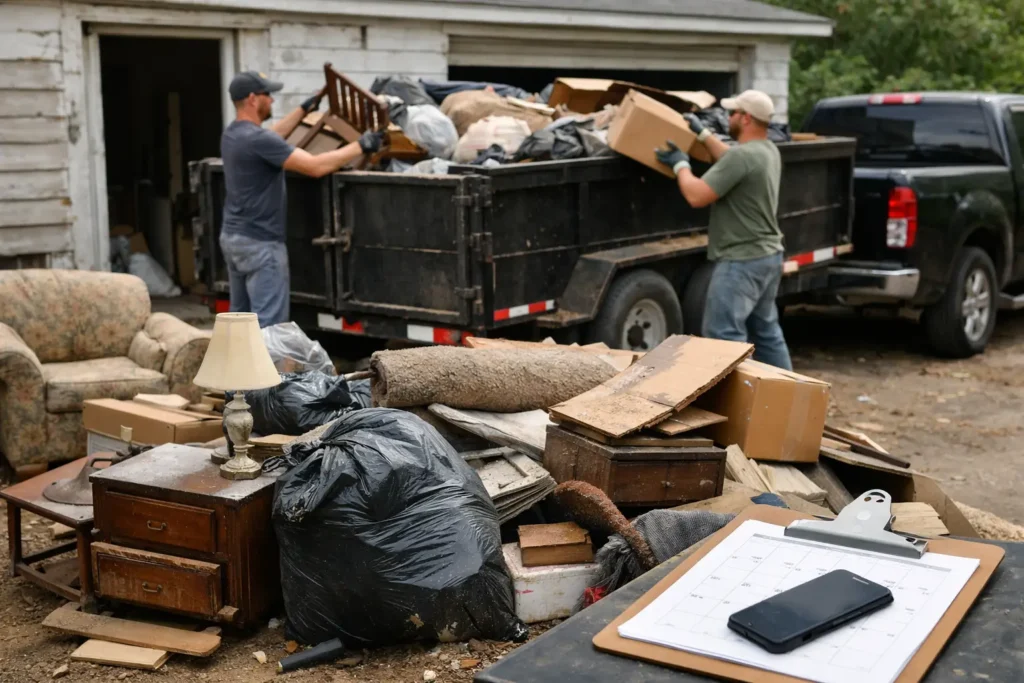
An estate cleanout is rarely just a pile of furniture and boxes. It may involve a family home that needs to be listed, a rental property that has to be turned over, or a house full of items nobody has had the time or headspace to sort. Knowing how to schedule estate cleanout work starts with setting a realistic plan before a crew arrives. A little preparation prevents rushed decisions, blocked access, and surprise changes on cleanup day.
The goal is not to make a difficult situation more complicated. It is to get the property cleared in the right order, protect the items that matter, and give everyone a clear picture of what happens next.
How to Schedule an Estate Cleanout the Right Way
Start by deciding who has authority to make decisions for the property. That sounds basic, but it can stop a job cold when several relatives, an executor, a realtor, or a property manager all have different instructions. Pick one main point of contact for the cleanup crew. That person should be able to approve the scope of work, answer questions about items found on site, and confirm when the property is ready for service.
Next, set the outcome. Are you clearing the entire house for sale? Emptying only the garage and basement? Removing remaining furniture after family members have taken what they want? The answer affects crew time, truck space, labor, and scheduling.
A cleanout can be scheduled in phases if that makes more sense. For example, a family may want the first visit to clear a packed garage, workshop, or storage building so they can sort the main house without tripping over overflow. Another common approach is to remove the large furniture and obvious discard items first, then schedule a final pickup after the family has gone through closets and drawers.
Build the Timeline Around the Property, Not the Calendar
It is tempting to pick the first open date and deal with the details later. That works for a small pickup. Estate cleanouts usually need more thought.
If the home is being sold, ask the realtor when photos, inspections, repair work, and showings are expected. If it is a rental, coordinate with the turnover crew, painters, flooring installers, or maintenance team. Contractors do not need a house full of old furniture and loose debris while they are trying to start work. Clearing the property before those crews arrive keeps the job moving and reduces the chance that items get mixed in with construction materials.
Leave room for sorting. Most families underestimate how long it takes to check filing cabinets, desk drawers, closets, toolboxes, and storage tubs. Personal papers, photos, jewelry, firearms, collectibles, and family records can turn up in places nobody expects. Do not schedule a full clearout for the morning after the first family walkthrough unless everyone is certain the sorting is finished.
A practical timeline often looks like this:
- Set a family sorting deadline several days before cleanup.
- Arrange a walkthrough or provide clear photos for an accurate quote.
- Confirm the removal date after access, keys, and decision-makers are lined up.
- Keep one backup contact available during the job.
- Schedule cleaners, repair crews, or listing photos after the removal is complete.
That sequence may shift when a closing date or lease deadline is tight. If time is short, tell the cleanup company upfront. A good crew can help you identify what needs to happen first instead of showing up to a property where no one is ready to make decisions.
Get a Clear Scope Before You Book
A clear scope protects everybody. Before scheduling, walk the home room by room and identify what stays, what goes, and what needs a decision. Use tape, signs, or a simple written list for items that must remain. If an item is staying, make it obvious. A note buried in a text thread will not help much when a crew is loading a full room.
Photos are useful for an initial conversation, especially for property managers coordinating from another location. Still, some properties need an in-person walkthrough. Heavy furniture, packed sheds, steep driveways, narrow staircases, detached buildings, and large amounts of loose material can affect the labor involved. An accurate scope leads to straightforward, all-in pricing and fewer adjustments on the day of service.
Be honest about the condition of the property. If there are rooms that have not been opened in years, say so. If there is a basement with limited access or a backyard shed full of old equipment, include it in the request. The crew needs the full picture to bring the right people, equipment, and truck capacity.
For homeowners and families in Northeast Georgia, Drop Zone CleanUp can help plan the hauling side around the condition of the property and the deadline in front of you. The important part is clear communication before the date is locked in.
Handle Keep, Donate, Sell, and Remove Decisions Early
The biggest cause of estate cleanout delays is not hauling. It is last-minute sorting.
Before the scheduled date, remove personal documents and any small valuables you intend to keep. Gather family photos, paperwork, medications, keys, remote controls, and sentimental items in one designated area away from the work zone. If relatives live out of town, give them a firm deadline to claim belongings. Open-ended requests such as come by whenever you can often turn a two-day project into a month-long delay.
Selling or donating items can make sense, but it depends on the item and the time available. A few quality pieces may be worth the effort. Trying to sell every chair, dish set, and old tool usually slows down a property that needs to be cleared. Decide what is truly worth moving separately, then let the cleanup plan focus on getting the rest out of the way.
If there are items that must not be removed, place them in a locked room, move them off site, or clearly mark that area as off limits. This is especially helpful when the house has several family members involved and nobody wants to guess what another person intended to keep.
Prepare Access for Cleanup Day
A good cleanup crew can work efficiently only when it can get to the material. Before the appointment, make sure gates are unlocked, vehicles are moved, and the driveway has room for the truck. If the property is in a neighborhood with parking rules or a narrow road, plan that out before the crew arrives.
Confirm who will provide keys or meet the crew. If nobody can be there, make arrangements for access and make sure the authorized contact can answer the phone. A locked gate or missing key can turn a scheduled cleanout into a wasted trip.
Walkways should be reasonably clear, but do not feel like you need to stage the entire house. Moving heavy items to the curb can create more work, damage floors, or block access. It is better to point out the areas being cleared and let the crew handle the loading plan safely.
For properties with stairs, long carry distances, or outbuildings, mention those details when scheduling. They are not deal-breakers. They simply affect how the job is planned.
What to Expect During the Cleanout
On cleanup day, the crew should confirm the scope, review any marked stay items, and verify access before loading starts. This is the time to point out areas that were added or removed from the original plan. Clear communication at the beginning keeps the rest of the work moving.
Estate cleanouts are physical work, but they also require judgment. A dependable crew does not treat a family property like a random load of junk. The house may be vacant, but it is still someone’s home. Crews should work carefully around walls, doors, floors, and remaining belongings while keeping a steady pace.
Once the hauling is complete, do a final walkthrough before the crew leaves. Check closets, sheds, cabinets, attic access, and outdoor areas included in the scope. It is much easier to address a missed pile while the truck and crew are still on site than after the property has been locked up and handed to the next trade.
When a One-Day Cleanout Is Not the Best Fit
Some estates can be handled in one scheduled visit. Others should not be rushed. A large home with years of accumulated belongings, multiple outbuildings, or family members still making decisions may need staged service. That is not a failure to plan. It is often the cleaner, more respectful approach.
The same applies when contractors are waiting to begin repairs. Clear the areas they need first, then finish secondary spaces on a follow-up visit. Getting the kitchen, main living areas, or damaged rooms opened up can keep renovation work from sitting still.
The best estate cleanout schedule gives people enough time to make decisions, then gives the crew a clear property and a clear mission. Set the deadline, mark what stays, confirm access, and let the removal work happen without unnecessary drama.