

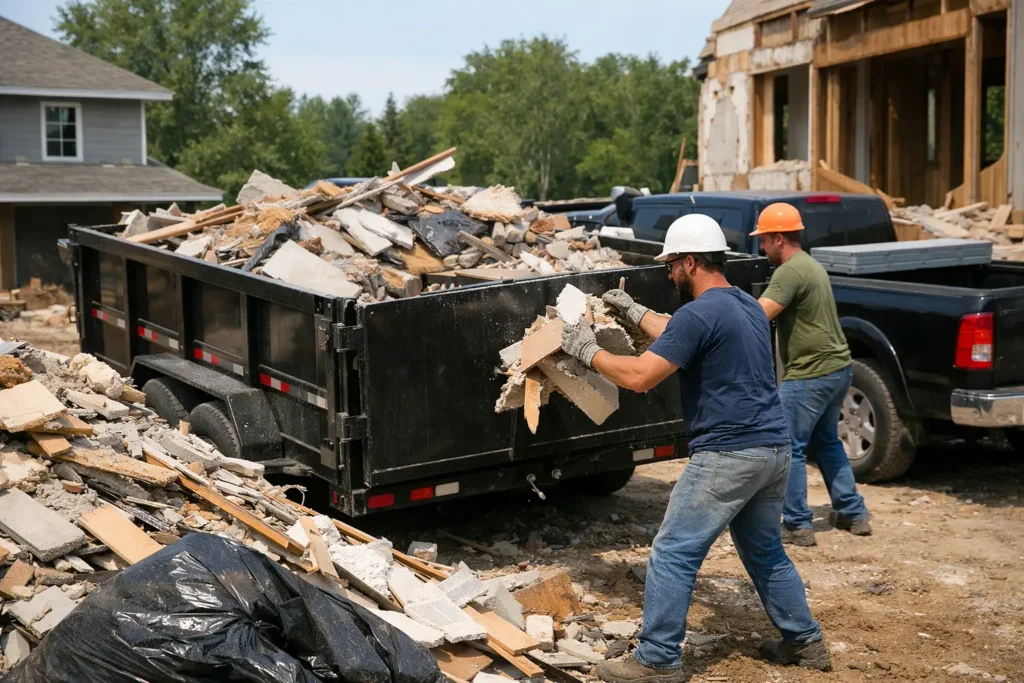
A remodel can be 90 percent progress and 10 percent trash, but that last 10 percent is what slows everything down. Piles of drywall, busted tile, scrap lumber, old cabinets, and packaging stack up fast. That is where construction debris hauling services make a real difference. They keep the site usable, cut down on delays, and take one more problem off the plate for the person trying to keep the job moving.
If you have ever watched a crew lose half a morning stepping around debris, shifting piles, or waiting on a cleanup plan, you already know this is not a minor detail. Debris control affects workflow. It affects safety. It affects how a homeowner sees the project and how quickly the next trade can get in and work.
What construction debris hauling services actually cover
A lot of people hear the phrase and think it just means somebody shows up with a trailer and loads junk. Sometimes it is that simple. More often, the job needs a little more coordination than that.
Construction debris hauling services usually cover material from remodels, renovations, tenant turnovers, light demolition, and property cleanup work. That can include wood, drywall, flooring, cabinets, countertops, fencing, concrete chunks, fixtures, doors, siding, yard debris tied to a project, and general job-site waste. On some jobs, the bigger value is not just hauling. It is labor. A crew that can load, sort, remove, and clear access points saves time in a way a basic pickup service does not.
This matters for both homeowners and professionals. A homeowner doing a kitchen demo may need one cleanout at the end. A contractor doing a full interior renovation may need recurring pickups so debris never gets ahead of the schedule. Same service category, different operational need.
Why debris removal matters earlier than most people think
The mistake on a lot of jobs is waiting too long. People put cleanup on the back end, as if debris is only a final-step issue. In the field, that usually backfires.
When debris starts building up, the job gets tighter. Walkways close up. Materials get mixed together. Sharp scraps and broken pieces end up where people are carrying tools or finished materials. Even if nobody gets hurt, the site gets slower and more frustrating to work in.
For contractors, this is a schedule problem as much as a cleanliness problem. Framing debris left too long gets in the way of mechanical rough-in. Flooring tear-out can hold up installers if the site is not fully cleared. Exterior debris from a fence removal or shed teardown can block access for other equipment. Keeping cleanup on pace with the work helps every phase after it.
For homeowners, the issue is often stress. A project already disrupts the house. When debris starts spilling into the driveway, garage, or yard, it feels like the job is taking over the property. Fast hauling helps restore some order while work is still going on.
Not every job needs the same hauling setup
This is where experience matters. There is no one-size-fits-all debris plan.
A bathroom demo usually creates dense, heavy waste in a small footprint. Think tile, mortar, vanities, and broken fixtures. A deck removal may produce bulkier material that loads differently and may need extra labor to break down. A rental property cleanout after repairs can be a mixed load with construction debris, abandoned items, and exterior trash all in one go.
Then there is concrete, brick, and dirt-heavy material. Those loads need to be handled with attention to weight, access, and equipment. You do not want somebody showing up underprepared and then trying to figure it out on your driveway or active site.
The best approach depends on volume, material type, access, and timing. Some jobs need a single full load. Some need staged pickups across several days. Some need equipment-assisted cleanup because the debris pile is too large, too heavy, or too spread out to handle efficiently by hand alone.
What to look for in a hauling crew
The easy answer is reliability, but that word gets thrown around a lot. On a real project, reliability has a few specific parts.
First, they need to communicate clearly. If pickup is set for Thursday afternoon, you should not be guessing whether anyone is actually coming. Second, they need to understand job-site conditions. That means access, load size, material limitations, and how to work around an active project without turning cleanup into another headache. Third, pricing needs to be clear before the work starts. Nobody wants vague estimates that change once the truck is half loaded.
Licensed and insured matters too, especially for contractors and property managers. If a hauling company is working around structures, driveways, equipment, or occupied properties, professionalism is not optional.
A good crew also knows how to leave a site better, not just emptier. That means they are not dragging debris across finished surfaces, clipping gate posts on the way out, or leaving nails and small scraps behind because the big stuff is gone. A proper load-out should actually clean up the area, not just remove the obvious pile.
The trade-off between speed and planning
Everybody wants fast service. That is fair. But speed without a plan can create new problems.
If the crew arrives before the debris is ready, the site may not be staged for efficient loading. If pickup happens too late, the pile may grow into a bigger labor job than expected. The sweet spot is scheduling hauling around the point where debris is ready to go but has not started interfering with production.
For contractors, that often means tying hauling to project milestones. After demo. Before insulation. After flooring tear-out. Before final cleanup. For landlords and property managers, it might mean scheduling removal right after turnover work or after an eviction cleanout so the unit can move into repair or showing mode quickly.
For homeowners, one well-timed debris haul can make the whole project feel more under control. You do not always need multiple visits. You just need the right one.
Construction debris hauling services for contractors
Contractors usually care about three things first: keeping crews moving, keeping the site safe, and not wasting time chasing vendors. That is why hauling support works best when it feels like part of the operation instead of an add-on.
A dependable debris crew helps protect production time. Your guys are there to build, install, repair, and finish. If skilled labor is spending hours dragging demo waste and sorting scrap piles, the job is paying for the wrong work. Hauling services step in so the trades can stay on their own tasks.
There is also the homeowner-facing side of it. A cleaner site reads as a better-run project. Even when a remodel is noisy and messy by nature, visible cleanup effort builds confidence. People notice when debris is handled promptly and professionally.
In Northeast Georgia, where a lot of jobs happen in occupied homes, rental properties, and smaller commercial sites, that matters. Access is tighter. Neighbors are close. Driveway space is limited. A hauling partner who understands how to work neatly in real neighborhoods is worth a lot more than somebody who only knows how to toss debris into a truck.
Construction debris hauling services for homeowners and property managers
For homeowners, the biggest benefit is usually not technical. It is relief. You get the mess out, reclaim the driveway or side yard, and stop staring at a pile that keeps growing every day.
For property managers and landlords, the value is speed with less back-and-forth. Turnovers, repairs, abandoned furniture, renovation debris, and exterior junk often overlap. One crew that can show up, load out the mess, and clear the property makes it easier to get to the next step.
The details still matter. Access codes, tenant timing, parking limits, stair access, and mixed materials all affect how the work gets done. A crew that asks the right questions before arrival usually runs a smoother job once on site.
When local hauling is the better call
There is a big difference between a company that works this kind of cleanup every week and one that treats it like a side service. Local operators tend to understand the rhythm of these jobs better. They know what residential remodel debris looks like, what a turnover cleanout turns into, and how fast a small demo pile can become a real obstruction.
That practical experience is what people are really paying for. Not just a truck. Not just disposal. They are paying for fewer delays, fewer surprises, and less time spent managing a mess that should already be gone.
Drop Zone CleanUp works with homeowners, contractors, and property managers who need that kind of straightforward support. The goal is simple: get the debris out, protect the site, and help the next phase move without unnecessary drama.
If you are looking at a pile of construction waste and thinking you will deal with it later, later usually costs more time than you expect. Get it off the site while the job still has momentum.