A back hallway full of busted shelving, pallets stacked behind a retail strip, office furniture left after a tenant move-out, drywall scraps piling up on a job site – that stuff slows people down fast. Commercial junk removal is not just about getting rid of junk. It is about clearing obstacles so work can keep moving, tenants can turn over faster, and properties stay safer and easier to manage.
For contractors, property managers, landlords, and business owners, cleanup usually becomes urgent at the worst time. A crew is trying to finish a build-out. A tenant leaves more behind than expected. A store has to prep for a remodel. A warehouse corner becomes a dumping ground because nobody has time to deal with it. That is when having a reliable hauling crew matters.
What commercial junk removal actually covers
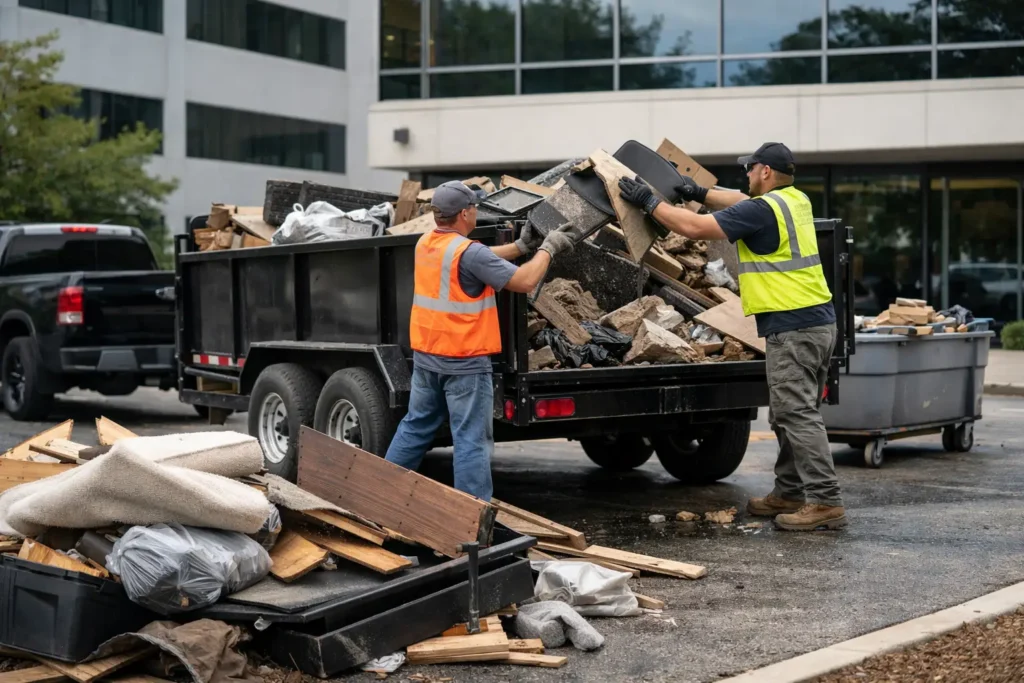
A lot of people hear the phrase and think it only means hauling away random trash from an office. In the field, it is usually a lot broader than that. Commercial junk removal can include office cleanouts, retail fixture removal, warehouse debris hauling, tenant turnover cleanup, pallet and packaging removal, construction debris pickup, and bulky item hauling for businesses and managed properties.
Some jobs are clean and straightforward. Think desks, chairs, cubicles, and storage room clutter. Others are rougher. You might have broken shelving, soaked materials, old displays, carpet rolls, fencing, or renovation debris mixed together behind a building. The right crew needs to know how to sort the job, load efficiently, and get the site back under control without turning it into a bigger problem.
That matters because commercial cleanup is usually tied to a deadline. A lease turnover date. A city inspection. A punch list. A reopening schedule. A new tenant move-in. When debris sits too long, it affects more than appearance.
Why commercial junk removal matters more than people think
On paper, junk hauling can sound simple. In practice, it affects schedule, safety, access, and labor costs.
On an active site, debris creates friction. Materials get blocked in. Subs lose time walking around piles or moving junk out of their own way. Forklift paths get tighter. Dump trailers fill with the wrong stuff. The site starts looking disorganized, and that usually means the job is getting less efficient.
For property managers, the issue is different but just as real. Leftover furniture, bagged trash, mattresses, old appliances, and abandoned tenant items make a property look neglected. That can hurt leasing, delay maintenance, and create complaints from neighboring tenants. If a unit, storefront, or office needs to be turned quickly, cleanup is one of the first things that has to happen.
There is also the liability side. Loose debris, sharp materials, and blocked walkways are not just ugly. They are hazards. A pile of busted wood with exposed nails behind a building might seem minor until someone trips near it or a contractor has to work around it. Good cleanup reduces that risk.
When it makes sense to call a crew instead of handling it in-house
It depends on the volume, the material, and how your people are supposed to be spending their time.
If a maintenance tech or site superintendent can knock out a small pile in half an hour, that is one thing. But once cleanup starts taking trucks off the road, pulling skilled labor away from the job, or requiring multiple dump runs, it stops being efficient. You are paying good people to do hauling work instead of the work they were actually hired for.
That is where a dedicated removal crew earns its keep. One call, one crew, and the pile is gone. No juggling labor, no borrowing trailers, no figuring out where everything needs to go. For a contractor, that means your crew keeps building. For a property manager, it means your team can stay focused on turnovers, maintenance, and tenant issues.
Commercial junk removal on active job sites
Construction and renovation jobs are a big part of commercial cleanup. Not every debris pile needs a full dumpster plan, and not every site has room for one. Sometimes you just need a hauling crew to come in, load out what is in the way, and get the site cleaned up enough for the next phase.
That can include drywall scraps, trim, flooring, cabinets, packaging, broken concrete, old fixtures, and general renovation debris. It may also involve light tear-out material from a retail build-out or office renovation. The key is speed and coordination. If cleanup drags, everyone behind it gets backed up too.
The best commercial junk removal support on a job site is simple. The crew shows up when they said they would, understands site access, loads efficiently, and leaves the area cleaner than they found it. No drama. No confusion. Just progress.
Tenant turnovers, evictions, and property cleanouts
This is where commercial cleanup gets unpredictable. One unit might just have a few leftover items. Another might be packed with furniture, bagged trash, damaged goods, and months of accumulation.
Property managers and landlords usually do not need a lecture about that. They need the space cleared so they can assess damage, schedule repairs, and get the unit back into circulation. The longer junk sits, the longer everything else waits.
These jobs also need a little judgment. Some items are easy to grab and go. Others are buried, awkward, or mixed with debris. Access can be tight. Stairs can slow things down. Parking can be limited. A crew with real field experience plans around that instead of acting surprised on arrival.
What good service looks like
A lot of frustration in this industry comes from poor communication. Missed arrival windows, vague pricing, half-finished loads, and no real plan for the job. That is what business customers are trying to avoid.
Good commercial junk removal starts with clear scope. What is being removed, where it is located, how access works, and what the site needs to look like when the crew is done. Pricing should be straightforward. Not padded with mystery add-ons, and not so vague that nobody knows what the final bill will be.
From there, it comes down to execution. Show up on time. Bring the right equipment. Load safely. Protect the property. Finish the job. If something about the scope changes, communicate it early. That sounds basic, but it is exactly what keeps projects from getting messy.
Licensed and insured service matters too. For commercial clients, that is not a nice extra. It is part of working with a legitimate operator who understands how job sites and managed properties actually function.
A few real-world situations where this service pays off
A retail tenant moves out and leaves racks, counters, shelving, and stockroom junk behind. The property manager needs the space cleared before contractors can repaint and start flooring.
An office renovation wraps up, but old desks, cubicle panels, and packaging are still stacked in the loading area. The new furniture install is coming, and the dock needs to be open.
A small commercial build has debris scattered across the site – lumber offcuts, busted pallets, drywall, and empty material stacks. The GC does not need a speech. They need the mess gone before the next trade rolls in.
A landlord gets possession back after an eviction and finds furniture, mattresses, bags of trash, and damaged household items still inside. The faster the cleanout happens, the faster repairs can start.
Those are different jobs, but the reason for calling is the same. Something is in the way, and it needs to be removed by people who know how to handle it.
Choosing a commercial junk removal company
Look for a company that talks like operators, not like a script. You want clear communication, real scheduling, and someone who understands job flow. If you are managing trades, tenants, or turnover timelines, you do not need sales fluff. You need to know the crew will show up ready to work.
It also helps to choose a local company that knows the pace of work in places like Winder and the broader Northeast Georgia market. Local service usually means better coordination, faster answers, and fewer handoffs. If a cleanup affects your schedule, that kind of responsiveness matters.
Drop Zone CleanUp is built around that kind of work. Straightforward pricing, dependable communication, and crews that understand the job is not done until the mess is out of the way.
Commercial junk removal is one of those services people tend to think about only when there is a problem. Fair enough. But when the pile is blocking progress, the right crew can change the whole day. Clear the junk, open the space, and let the real work continue.