

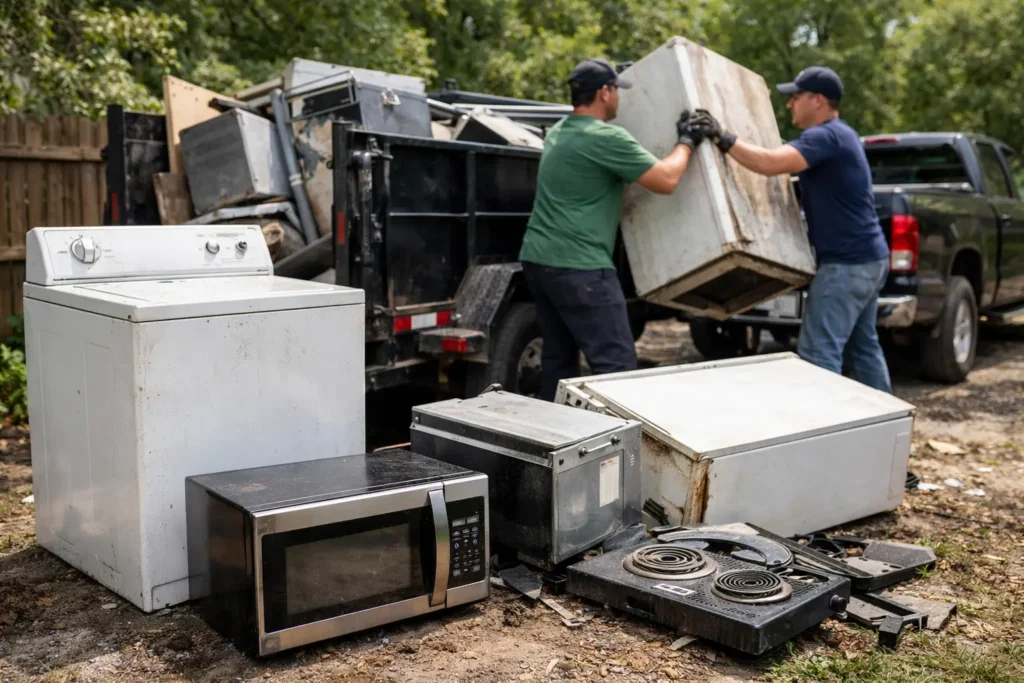
That dead refrigerator in the garage is not just taking up space. It is blocking your next project, your move-out, or the cleanup you have been putting off for months. So, can junk removal take appliances? In most cases, yes. A professional crew can haul away many common household and commercial appliances, but the type of unit and its condition determine how it needs to be handled.
For homeowners, landlords, and contractors, the main goal is simple: get the appliance out without damaging the property, missing a disposal requirement, or creating one more thing for the crew to deal with on cleanup day. Here is what to expect before you schedule pickup.
Can Junk Removal Take Appliances From Any Property?
Junk removal crews commonly pick up appliances from houses, apartments, rental turns, offices, retail spaces, and job sites. Whether it is one old washing machine or a garage full of appliances after an estate cleanout, the work is usually straightforward when the crew has clear access and knows what is being removed.
The easiest items to haul are standard, unplugged appliances that can be safely moved by hand or with a dolly. Think washers, dryers, stoves, ovens, dishwashers, microwaves, freezers, refrigerators, window AC units, water heaters, and small countertop appliances.
The answer changes when an appliance is still connected, built into cabinetry, exceptionally heavy, or holds materials that require a specific disposal process. That does not always mean a removal company cannot take it. It means the quote and plan need to match the actual job.
For example, a freestanding range sitting in a garage is a basic pickup. A wall oven that is still installed between cabinets is a different conversation. It may need to be disconnected and carefully removed before hauling can begin. The same goes for appliances in tight basements, upstairs laundry rooms, or backyards with soft ground and narrow gates.
Appliances Most Junk Removal Crews Can Haul
Most appliance hauling jobs fall into a few familiar categories. Laundry appliances are common, especially during remodels and rental turnovers. Washers and dryers are heavy, awkward, and not something most people want to wrestle down a staircase themselves.
Kitchen appliances are another regular call. That includes refrigerators, freezers, dishwashers, ranges, ovens, cooktops, microwaves, and old compactors. When a homeowner is replacing a full kitchen or a contractor is clearing a renovation site, getting those bulky units out quickly keeps the work area clear.
Heating and cooling-related appliances often need more attention. Refrigerators, freezers, dehumidifiers, window units, and similar equipment may contain refrigerant. They must go through the proper handling process rather than being tossed in with ordinary debris. A reputable removal company will tell you up front if it can accept the unit and how it will be managed.
Other common pickups include water heaters, exercise equipment with electronic components, ice makers, beverage coolers, and commercial kitchen equipment. For commercial units, share dimensions, photos, and the location before booking. A small under-counter cooler and a large walk-in component are not the same type of haul.
When Appliance Pickup Needs Extra Planning
The appliance itself is only part of the job. Access often decides how much labor and equipment are needed.
A crew needs to know if the unit is on a second floor, behind a fence, in a crawlspace, or at the bottom of a steep driveway. In Northeast Georgia, we also see plenty of appliances left in sheds, detached garages, and uneven backyard areas. Wet grass, loose gravel, and tight turns can slow down a simple pickup if nobody mentions them until the truck arrives.
Built-in appliances can require light removal work before they are ready to haul. Cabinets, trim, mounting brackets, or countertops may be involved. A good rule is to ask what needs to be disconnected before the crew arrives. Do not assume a hauling crew will handle every trade-related step involved in removing an installed unit.
Weight matters too. Older appliances are often heavier than newer models, and some commercial equipment is far beyond a standard two-person lift. Photos and basic measurements make a big difference when requesting a quote. They help the crew bring the right manpower, dollies, and protection for floors, doorways, and walls.
What to Do Before the Crew Arrives
A little preparation makes appliance removal faster and safer. Start by emptying the unit completely. Remove food from refrigerators and freezers, dishes from dishwashers, clothing from washers and dryers, and loose trays or shelves if they are likely to shift during transport.
If a refrigerator or freezer has been unplugged, give it time to defrost. Put down towels if needed and drain any standing water. Nobody wants melted ice running through a garage, across hardwood flooring, or down apartment stairs while the unit is being moved.
Make sure the appliance is disconnected from power and any applicable service connections before pickup. If you are not sure whether a unit is fully disconnected, stop and confirm it with the appropriate qualified professional. A removal crew should be arriving to haul, not to discover that a machine is still tied into the property.
Clear a reasonable path from the appliance to the exit. Move cars out of the driveway when possible, pick up loose items near the doorway, and let the crew know about pets, gate codes, parking restrictions, or stairs. Those details are small, but they prevent delays.
If you are clearing several rooms, separate the appliances from items you plan to keep. On estate cleanouts and eviction cleanouts, crews often find personal belongings sitting on top of or behind a unit. Marking keep items ahead of time avoids confusion once loading begins.
Disposal Is Not Always a One-Stop Process
One reason appliance removal is different from hauling a couch is that disposal options vary by item. Metal appliances may be directed toward recycling channels. Refrigerated units and certain electronic components require their own handling path. Local facility rules can also change, so an experienced local crew checks what applies instead of making assumptions.
That is why a low-detail quote can turn into trouble later. If you only say “old fridge,” but the crew finds a large commercial refrigerator in a basement with no exterior access, the scope is not the same. Straight answers and a few photos help get the price and scheduling right from the start.
For property managers, this matters during turns. Appliances left behind by tenants can hold food, water, broken glass, or loose contents. Let the removal company know what condition the unit is in and whether the property is vacant. The crew can plan the pickup without holding up cleaning, repairs, or the next showing.
Appliance Hauling for Renovations and Cleanouts
Contractors often need appliance removal at a specific point in the job, not whenever a truck happens to be available. Old kitchen units may need to leave before flooring crews arrive. A water heater may be blocking access for drywall work. Appliances pulled from a rental may be sitting in the way of painters and cleaners.
This is where dependable scheduling and clear communication matter more than a vague promise. The crew should know what is being removed, where it is staged, and what work needs to happen next. That keeps the site safer and lets your people keep moving.
Drop Zone CleanUp handles appliance hauling as part of larger property cleanouts, renovation debris removal, and standalone pickups across the Winder area and Northeast Georgia. The job starts with a clear description of the items and access conditions, then a straightforward plan to get them loaded and out of the way.
Get a Clear Answer Before You Schedule
The quickest way to avoid a wasted trip is to describe the appliance honestly. Say whether it is a refrigerator, washer, dryer, stove, freezer, AC unit, water heater, or commercial piece of equipment. Mention if it is connected, upstairs, built in, damaged, or difficult to reach. Photos are even better.
A professional crew can then tell you what can be hauled, what needs preparation, and what the all-in removal price covers. That is the practical answer to appliance disposal: get the details right before the truck pulls up, and the rest of the job goes a lot smoother.