

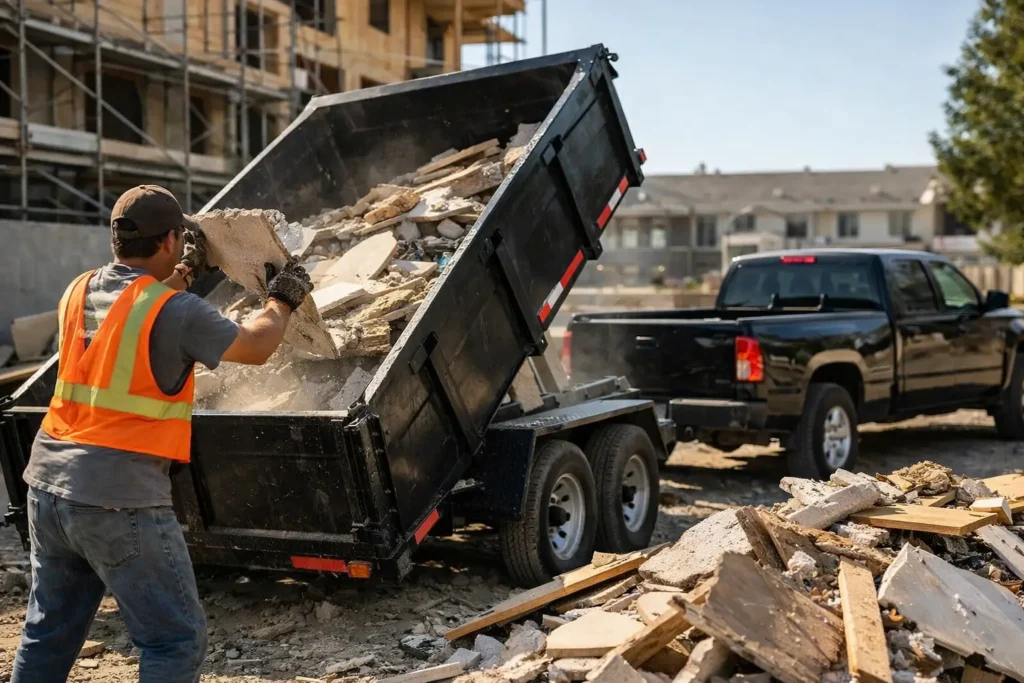
A renovation can look under control at 8 a.m. By lunch, the driveway is blocked with drywall, lumber cutoffs, flooring boxes, old cabinets, and busted-up concrete. That is where construction debris hauling Winder property owners and contractors can rely on becomes more than a convenience. It keeps access open, reduces job-site clutter, and gives the crew room to keep working.
For a homeowner, debris removal often becomes necessary when a project outgrows the garage, pickup bed, or weekly trash bin. For a contractor, it is usually about keeping the schedule from slipping. Material piles create trip hazards, slow down deliveries, and make a finished project look unfinished. A dependable hauling crew removes that bottleneck without turning cleanup into another task for your team.
When Construction Debris Starts Slowing the Job
Most projects do not begin with a debris problem. It builds in stages. A bathroom remodel produces old fixtures, tile, drywall, and packaging. A deck replacement leaves treated lumber, railing sections, fasteners, and worn boards. A rental turnover may involve damaged flooring, cabinets, furniture, and construction leftovers all at once.
The tipping point is usually access. When workers have to step around piles, materials cannot be delivered where they need to go, or the customer cannot safely use part of the property, hauling needs to happen. Waiting until the end can work on a small project with plenty of space. On a tighter lot or active site, scheduled cleanouts during the job make more sense.
For contractors, there is also the closeout issue. You may have the work complete, but a debris pile can keep the property from looking ready for the customer, tenant, inspector, or next trade. Cleanup is part of finishing strong.
What a Hauling Crew Can Clear From a Work Site
Construction debris is rarely one clean pile. Most loads are a mix of tear-out material, packaging, and bulky items that came out during the work. The key is giving the removal crew a clear picture of what is on site before pickup.
Common materials include:
- Drywall, lumber, plywood, trim, and framing scraps
- Old cabinets, countertops, doors, fixtures, and flooring
- Carpet, padding, tile, brick, block, and small concrete debris
- Roofing-related cleanup material from minor repairs
- Cardboard, plastic wrap, pallets, and packaging from new materials
Weight changes the plan. A truck load of cardboard and trim is different from a pile of broken concrete, brick, or wet drywall. Heavy debris may require a different loading approach, more labor, or multiple trips. That is not a problem when it is discussed up front. It is a problem when the scope is guessed at from one photo and the actual pile is three times larger.
A good quote starts with the real situation: the material type, estimated volume, access to the pile, loading distance, and whether the crew will need to carry debris down stairs or around a building. Clear information leads to clear pricing.
Planning Construction Debris Hauling in Winder
The easiest pickups are not always the smallest ones. They are the ones that have a workable path from the debris to the truck. Before hauling day, think through where the crew can park, how far materials must be carried, and whether gates, vehicles, or stored materials will block access.
If possible, keep debris in one designated area. A pile near the driveway or curb line is generally faster to load than materials spread between the backyard, garage, side yard, and upstairs rooms. That does not mean everything has to be perfectly stacked. Real job sites are messy. It just helps to keep the removal area defined and leave a reasonable walking path.
Contractors can make the process smoother by scheduling cleanup around the work sequence. For example, a mid-project pickup after demolition can clear space for rough-in work and incoming materials. A final pickup after punch-list work handles packaging, cutoffs, and last-minute tear-out. On larger remodels, that rhythm keeps debris from taking over the property.
Homeowners should avoid moving heavy material just to make the pile look better. Broken concrete, old cabinets, and water-damaged debris can be awkward and sharp. Point out what needs to go, let the crew assess the load, and keep the work area clear while loading is underway.
The Trade-Off Between One Final Load and Ongoing Cleanup
There is no single right way to manage job-site debris. It depends on the type of project, available space, neighborhood rules, and how many trades are moving through the property.
One final removal is often practical for smaller interior renovations or projects where debris can be safely staged out of the way. It keeps coordination simple. The downside is that the pile can grow quickly, especially when demolition starts or new materials arrive in heavy packaging.
Ongoing cleanup makes more sense when the site is active, access is limited, or the property needs to stay presentable during the work. This is common on occupied homes, rental turnovers, retail spaces, and properties where crews need room for tools and deliveries. It requires a little more scheduling, but it can prevent a lot of unnecessary scrambling later.
The best approach is the one that matches the pace of the job. There is no value in paying for removal too early if the site has plenty of room. There is also no value in letting debris sit until it creates a safety or access issue.
Why Communication Matters More Than a Fancy Process
Debris hauling is straightforward work, but jobs go sideways when basic details are not communicated. Is the debris inside or outside? Is there a locked gate? Is the driveway steep? Are there heavy materials mixed into the pile? Is the property occupied? Those details affect the crew, equipment, time, and disposal plan.
For property managers and landlords, a photo before and after the work can be useful for documenting unit turnover or clearing requirements. For contractors, a quick call or message when the pile is ready helps avoid unnecessary downtime. For homeowners, knowing the arrival window and what is included in the quote makes the process less stressful.
Drop Zone CleanUp approaches this work like an operations problem: assess the load, get the crew and equipment in place, remove the material, and leave the area ready for what comes next. No drawn-out process. No vague handoff between departments.
Keep the Site Ready for the Next Step
A clean work area does not build the project, but it helps everything else happen. Crews can move freely. Deliveries have a place to land. Customers can see progress instead of piles. The final walk-through starts from a property that looks cared for, not one still buried in leftovers.
Whether you are clearing out after a kitchen remodel, handling demolition debris from a rental turnover, or keeping a contractor job site open for the next phase, the right hauling plan is the one that removes the obstruction before it becomes a delay. One call, one crew, and a clearer path to finishing the job.