

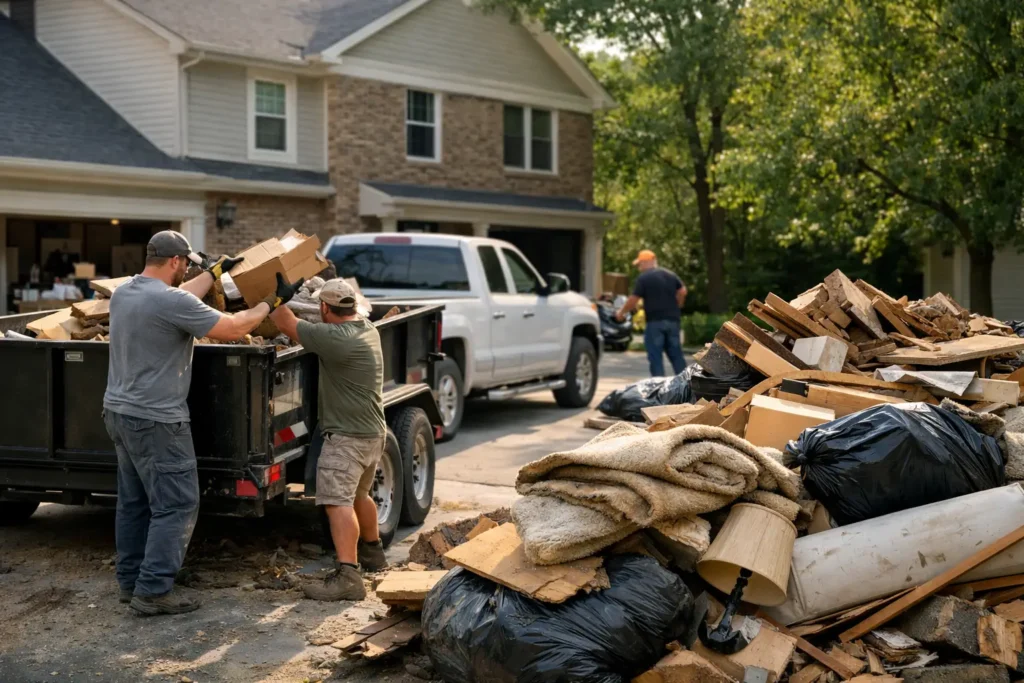
A spare room full of old furniture is one thing. A garage packed wall to wall, a rental left trashed after move-out, or a backyard buried in storm debris is a different kind of problem. That is where residential clean up services stop being a convenience and start being the fastest way to get your home, property, or project back under control.
Most cleanup jobs look manageable from the driveway. Then you get closer. There are broken pieces mixed into the pile, heavy items nobody wants to carry, sharp debris, soaked cardboard, old appliances, loose lumber, and a lot more volume than expected. What sounded like a Saturday job turns into multiple dump runs, a sore back, and half the mess still sitting there on Monday.
What residential clean up services actually cover
People hear the term and think it just means hauling off junk. Sometimes it does. But in real-world use, residential clean up services usually cover the work around the hauling too.
That might mean clearing furniture from a house before a sale, removing debris after a renovation, cleaning out a shed that has not been opened in years, or loading out a property after an eviction. In some cases, it is yard waste and storm debris. In others, it is a hot tub teardown, an appliance pickup, or a full estate cleanout where the goal is to empty the property so the family can move to the next step.
The common thread is simple. There is too much material, too much weight, or too much labor for a normal trash can and a pickup truck to solve the problem efficiently.
The jobs that usually call for a crew
A lot of homeowners wait too long before bringing in help. They start with the easy pile, knock out a few bags, then hit the point where the rest of the job is all heavy lifting and awkward material. That is usually when cleanup stalls.
Move-outs are a common example. Once the boxes are gone, what gets left behind is often the stuff nobody had a plan for – mattresses, worn-out sofas, old dressers, paint-splattered shelves, broken patio furniture, and random garage leftovers. It adds up fast.
Estate cleanouts are another. Those jobs are rarely just about volume. They are slow at first because families are sorting personal items, then suddenly there is a deadline for listing, repair work, or turning over the property. A cleanup crew helps close that gap once decisions have been made.
Renovation debris is its own category. Drywall, flooring, cabinets, lumber, doors, sinks, vanities, and demo leftovers take up space quickly. If debris starts stacking up around a house, the project slows down and the site gets harder to work in safely.
Then there are the messy jobs people do not want to deal with twice. Storm cleanup, hoarder situations, abandoned rental units, and overgrown outbuildings all fall into that category. These are not jobs where a homeowner wants to experiment with a few trash bags and see how it goes.
Why doing it yourself often costs more than expected
On paper, DIY cleanup sounds cheaper. Use your own labor, make a few dump runs, and keep the bill down. Sometimes that works. If the load is light, access is easy, and you have time, it can be a reasonable choice.
But that is not how most larger cleanups go.
The hidden cost is usually time first. Loading heavy items, protecting floors and door frames, breaking down bulk material, securing a trailer or truck bed, driving to disposal sites, unloading, and repeating the trip can eat up an entire weekend. If you are a contractor, landlord, or property manager, that delay has a real cost tied to turnover and schedule.
Then there is disposal. Not everything can go in one place, and not every local dump is set up for mixed loads. Appliances, yard debris, construction material, and household junk may need to be separated or handled differently. That is where a lot of DIY plans start falling apart.
Injury risk is the other part people ignore until something gets dropped. Sofas wedge in hallways. Old decks have nails everywhere. Water-damaged debris gets heavier by the minute. A cleanup company should already know how to move material out without turning the job into a bigger problem.
What good residential clean up services look like
Good service is not just a truck showing up. It is a crew that can look at the job, give a clear plan, and execute without making the customer babysit the process.
That starts with communication. You should know what is being removed, how pricing works, when the crew is scheduled, and what kind of access they need. If there are limits, they should be explained upfront instead of after the truck is loaded.
Professional cleanup also means working cleanly, not just quickly. In a residential setting, that matters. Narrow hallways, finished floors, fences, driveways, and landscaping all need to be respected while the material is coming out. A careless haul-out can create a second repair bill nobody wanted.
The best crews are also realistic about job conditions. Sometimes the pile is straightforward. Sometimes there is limited access, steep grades, soaked debris, or partial demolition involved before the loadout can even start. A solid operator will account for that instead of pretending every job is the same.
Choosing the right scope for the job
Not every cleanup needs a full property cleanout. That is where customers can overspend or underbook if nobody talks through the actual scope.
If you only need bulky items removed from a garage, that is one thing. If you need the garage emptied, swept out, and ready for a contractor, that is another. If a backyard has an old playset, scrap lumber, fencing, and brush mixed together, the crew needs to know whether the goal is basic haul-off or a true reset of the area.
This is especially important on properties changing hands. Homeowners may want the clutter gone. Landlords may need the unit rent-ready. Realtors may need a house cleared enough for photos first, then fully emptied later. The right cleanup plan depends on what happens next.
Residential clean up services for homeowners and property managers
Homeowners usually care about relief and convenience. They want the mess gone, the property respected, and the scheduling handled without a long chain of back-and-forth calls. They are often dealing with a life event behind the cleanup – a move, a loss in the family, a renovation, or storm damage.
Property managers and landlords usually care about speed, communication, and turnover. They need clear expectations, reliable arrival windows, and a crew that can handle ugly situations without turning every load into a negotiation. If a property has to be ready for repairs, cleaning, or listing, debris removal is often the first domino.
That is where an experienced local operator stands out. A company like Drop Zone CleanUp is not trying to make cleanup sound glamorous. The value is straightforward – one crew, a clear quote, solid communication, and the kind of follow-through that keeps the property moving toward the next step.
What to ask before you book
Before hiring anyone, ask how they price the job, what materials they handle, whether they are licensed and insured, and what the crew needs for access. Ask if labor is included. Ask what happens if the scope grows once the job starts.
You should also be honest about the condition of the site. If there are stairs, long carries, partial demolition needs, water-damaged debris, or a packed structure, say so upfront. That helps avoid scheduling the wrong equipment or underestimating labor.
A good cleanup job starts before anything is loaded. It starts with a clear picture of the mess and a crew that knows how to deal with it.
When it is time to stop looking at the pile
There is a point where cleanup becomes a drain on time, energy, and momentum. You keep walking past the same room, the same garage, the same debris stack, telling yourself you will get to it next weekend. Usually, the pile does not get smaller. It just gets in the way longer.
Residential clean up services make sense when the job is bigger than your time, heavier than your equipment, or more complicated than a few trash bags and a free afternoon. Once the mess is keeping a move, sale, renovation, or turnover from moving forward, the smart play is simple – get it cleared and get on with the job.