

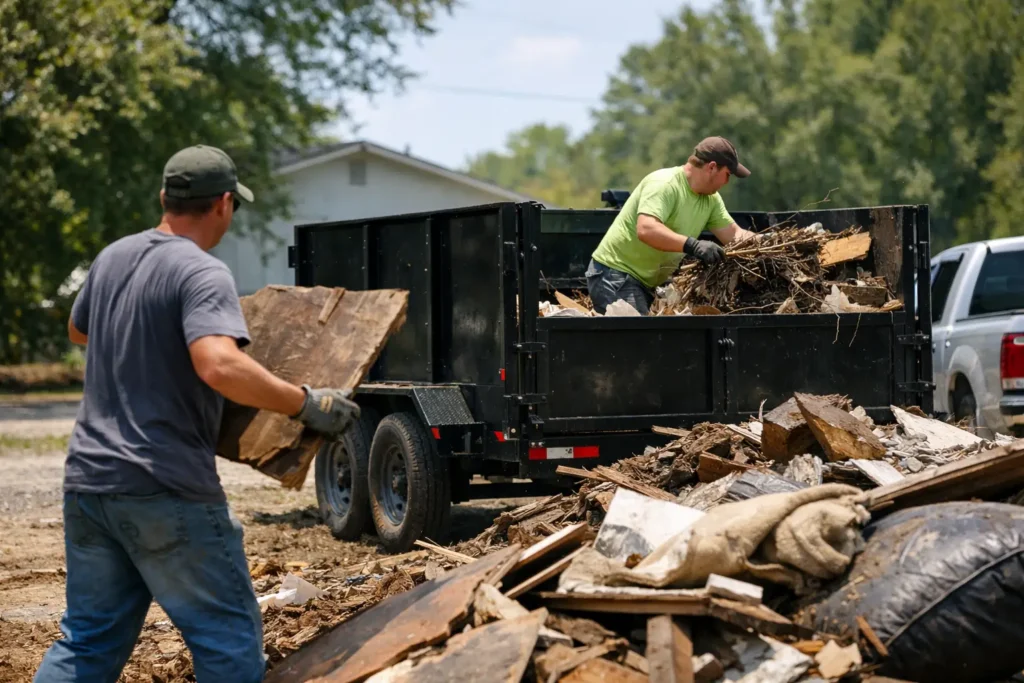
A search for “debris hauling Barrow County” usually happens when a pile has become more than an inconvenience. Maybe a remodel is stalled because drywall, lumber, and old fixtures are taking over the driveway. Maybe a rental has been cleared out, but the heavy lifting is still sitting at the curb. Or maybe a contractor needs the site cleaned before the next crew can get started.
The right hauling crew does more than load material into a truck. They help clear a bottleneck. That means showing up when expected, understanding what is on site, protecting the access area, and getting the debris out without creating a new problem for the homeowner, manager, or job superintendent.
When Debris Hauling in Barrow County Makes Sense
Not every cleanup requires a hauling crew. A few bags of household trash or a small load of yard clippings may be manageable on your own. The situation changes when the material is bulky, heavy, spread across a property, or tied to a deadline.
For homeowners, that often means debris from a kitchen update, flooring replacement, garage cleanout, storm damage cleanup, or a move. Old furniture, mattresses, appliances, fencing, carpeting, cabinets, and construction scraps can fill a pickup bed quickly. More often than not, the real issue is the time and labor it takes to sort, load, secure, transport, and unload it.
For contractors, debris removal is part of keeping the work area functional. A framing crew cannot work efficiently around piles of cutoffs. Painters and flooring installers should not be stepping over demolished material. And a site that looks neglected can make a client question the entire project, even when the actual workmanship is solid.
Property managers and landlords deal with a different version of the same problem. After an eviction, move-out, or abandoned-unit cleanup, the goal is not just to remove what was left behind. The goal is to get the property ready for repairs, turnover, and the next tenant without losing more days than necessary.
What a Good Hauling Plan Looks Like
The best cleanup jobs are straightforward because the details are handled before the crew arrives. A clear quote starts with knowing the volume of material, where it is located, how close the truck can get, and whether there are heavy or awkward items involved.
Access matters more than people think. A pile near the driveway is different from debris behind a house with a narrow gate, steep slope, or soft ground. A second-floor apartment cleanout takes more labor than a garage load. Concrete, dirt, and dense demolition material also carry differently than loose household items. Those details affect the crew, equipment, and hauling plan needed to finish the work safely.
A professional crew should also communicate what is included before work begins. “All-in pricing” should mean the customer understands the scope of the job, not that they are left guessing after the truck is loaded. If the on-site material differs substantially from what was described, that should be discussed plainly before the work moves forward.
Common Jobs That Need a Hauling Crew
Construction debris is one of the most common calls. Remodeling and light demolition can produce more waste than expected, especially when old flooring, cabinets, tile, drywall, trim, and fixtures come out at once. One room can create a full load faster than most homeowners anticipate.
Yard and storm debris can also become a major cleanup issue after severe weather. Broken limbs, brush, damaged outdoor furniture, and scattered materials can block access and make a property look rough long after the storm has passed. Hauling helps restore usable space, particularly when debris is too large or too spread out for normal collection.
Estate cleanouts and whole-property cleanouts require a more deliberate approach. These jobs can involve packed garages, sheds, storage rooms, basements, and years of accumulated belongings. The work goes better when the owner, family representative, or property manager identifies what must stay before the cleanup starts. A simple walkthrough can prevent confusion and keep the crew focused on the right material.
Then there are the hard-to-move items: old hot tubs, worn-out appliances, furniture sets, play equipment, sheds, fencing, and pieces of broken concrete. These jobs are not difficult because the customer lacks motivation. They are difficult because the material is heavy, awkward, or requires the right tools and enough hands to handle it safely.
Why Timing Matters on Active Jobs
On an active project, debris does not just take up room. It affects the schedule. Crews lose time walking around piles, moving materials twice, or trying to find clear space for the next phase of work. That is why contractors often schedule hauling at key points: after demolition, before inspections, before finish trades arrive, or before a final walkthrough.
The timing depends on the job. For a small bathroom renovation, a cleanup after demolition may be enough. For a larger residential project, periodic hauling can keep the site from getting buried. The goal is not to remove every scrap the minute it hits the ground. The goal is to keep the work zone safe, accessible, and ready for the next crew.
This is where dependable communication matters. If a crew is expected on a certain day, the contractor needs to know whether the job is on track. If access changes or material volume grows, that needs to be addressed early. Good hauling support is practical coordination, not a vague arrival window and a lot of phone tag.
Preparing Your Property for Debris Removal
You do not need to organize a pile perfectly before a hauling crew arrives. But a little preparation saves time and helps avoid mix-ups. Set aside anything you plan to keep, especially items stored near the debris. Marking or moving those items is better than relying on a quick verbal instruction during a busy cleanup.
Make a clear path to the material when possible. Move vehicles out of the loading area, unlock gates, and let the crew know about tight driveways, low branches, pets, or sensitive landscaping. If the debris is inside, point out stairs, narrow hallways, and anything that could affect the route out.
For job sites, keep the debris pile separate from usable material. That sounds basic, but it prevents good lumber, fixtures, doors, or equipment from being loaded by mistake. A designated pile also lets the crew work faster and lets the contractor see exactly what remains on site.
Choosing a Local Crew Without Guesswork
Hauling is a field service. The quality of the job comes down to execution. Look for a licensed and insured operator that can explain the process clearly, give you a straightforward scope, and communicate before arrival. The crew should be prepared to do real loading work, not expect the customer to solve the difficult part first.
Local knowledge helps, too. Barrow County properties range from established neighborhoods with tight access to rural lots with long driveways, rental units, and active builds. The plan for each job should fit the property instead of forcing every cleanup into the same routine.
Drop Zone CleanUp approaches hauling with that mindset: one crew, clear communication, and a focus on getting the obstruction out of the way so the property or project can move forward. Whether the pile came from a renovation, a tenant turnover, a storm, or a long-overdue cleanout, the job should feel handled when the truck leaves.
A debris pile rarely gets easier by waiting. Once it starts blocking access, slowing trades, or keeping a property from being ready, it is time to put a clear removal plan in place and get the space back.