

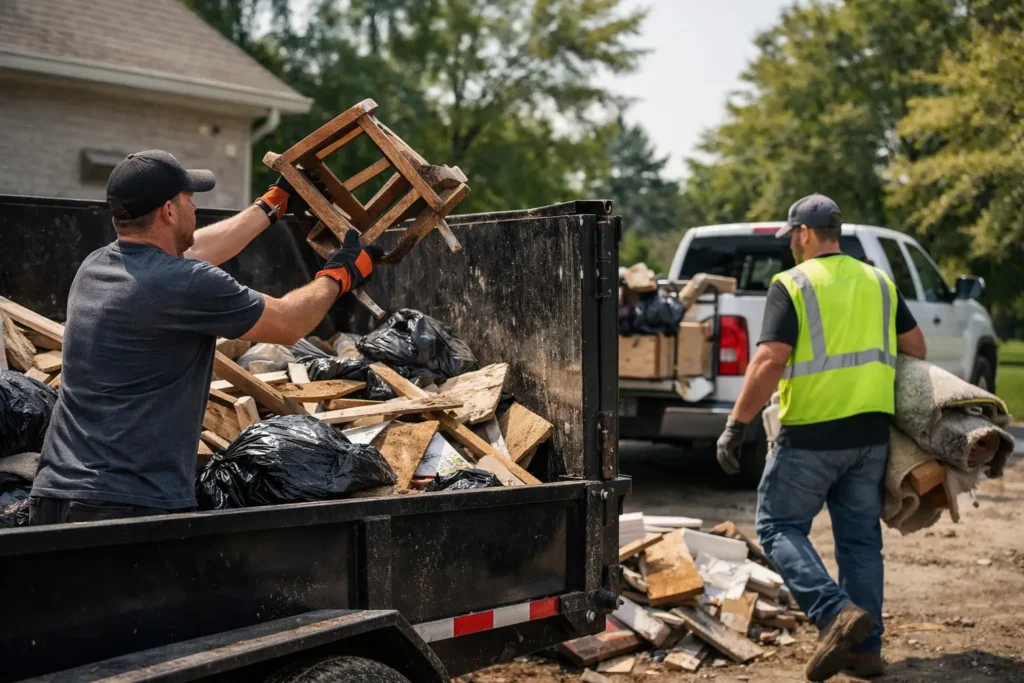
A pickup truck and a couple of guys can haul away junk. That does not mean they should be the ones on your property. When you hire licensed insured junk haulers, you are not paying for a fancy label. You are paying for accountability when something heavy has to come through a doorway, when debris is stacked around active work, or when a cleanout needs to happen without creating a new problem.
That difference shows up fast on real jobs. A homeowner clearing out a garage may just want the pile gone. A contractor needs scrap, drywall, and busted material removed without slowing the next trade. A property manager may be dealing with a move-out that already has enough headaches. In all three cases, the cheapest-looking option can get expensive if the crew damages a driveway, clips a fence, leaves half the load behind, or disappears when there is a problem.
What licensed insured junk haulers actually bring to the job
The phrase gets thrown around a lot, so it helps to keep it simple. Licensed insured junk haulers are operating as a real business and carrying insurance that helps protect against job-related issues. That matters because junk removal is physical work. Appliances scrape walls. Concrete chunks crack edges. Old furniture gets awkward in stairwells. Trailers move across grass, gravel, and tight drives.
A licensed operation also tends to run with more structure. You are more likely to get a real quote, a scheduled arrival window, and a crew that knows what is being loaded. That does not guarantee perfection, but it usually means there is a process behind the service instead of pure improvising.
Insurance is the part people ignore until they need it. If a worker gets hurt on your property or damage happens during removal, you want to know there is actual coverage behind the company doing the work. If there is not, the mess is no longer just in the garage or backyard.
Why it matters more on difficult cleanouts
For a single couch at the curb, some people take the risk. Once the job gets more involved, that gamble gets harder to justify.
Estate cleanouts are one example. These jobs often involve packed rooms, mixed materials, emotional stress, and a tight timeline for sale or turnover. The right crew needs to move carefully, communicate clearly, and keep the site under control. If the hauler is careless, the family or agent deals with the fallout.
Construction debris removal is another. On an active site, cleanup is not just about hauling trash. It affects safety, workflow, and production. Nails, offcuts, broken concrete, torn-out cabinets, and pallet waste can block access and slow crews down. A properly run hauling crew helps keep the site moving instead of adding confusion.
Eviction and rental property cleanouts also need a dependable operator. These jobs can involve furniture, bagged trash, abandoned items, and exterior debris all at once. Property managers do not need excuses. They need a crew that shows up, loads out, and leaves the place ready for the next step.
The hidden cost of hiring the wrong hauler
Most bad hauling experiences do not start with some dramatic disaster. They start small.
The crew shows up without the right equipment. They underestimate the volume. They say they can take everything, then leave behind what is harder to load. They drag items across a wood floor. They pile debris in a spot that blocks the next contractor. They quote one number by phone and another on site.
That kind of job burns time, not just money. If you are a homeowner, it can turn one stressful day into three. If you are a contractor, your labor is standing around a mess that should have been cleared already. If you manage properties, every delay affects turnover and leasing.
This is where licensed and insured matters in a practical way. Companies that invest in doing the work the right way usually take scheduling, communication, and site responsibility more seriously too. Not always, but usually. That is the trade-off worth understanding. A legitimate operator may not be the lowest number on paper, but they are often the lower-risk choice once the full job is considered.
How to tell if a junk hauler is actually professional
You can learn a lot before the truck ever arrives. Ask direct questions and pay attention to direct answers.
A professional hauler should be able to explain what they take, how pricing works, and what the crew will need for access. They should be clear about timing. They should not act irritated because you asked if they are licensed and insured. If that question makes them defensive, that tells you plenty.
It also helps to look at how they talk about the work. Experienced crews ask about stairs, distance from the load to the truck, heavy items, demolition debris, and whether the site is occupied. That is job awareness. Someone who gives a flat promise without asking anything may just be guessing.
For contractors and property managers, consistency matters as much as credentials. Can the company handle repeat work? Can they coordinate around trades, tenants, or access windows? Can they clean up after loading instead of treating the property like a dump point? Those details separate a real service partner from a random hauling pickup.
Licensed insured junk haulers and job site momentum
On residential jobs, junk removal is usually about reclaiming space. On commercial and construction jobs, it is about momentum.
Crews cannot frame, install, paint, or turn units efficiently if debris is stacked in work areas. Material waste in the wrong place creates rehandling. Rehandling costs labor. Labor costs schedule. A hauling crew that understands this will load efficiently, stay out of the way, and leave the space ready for the next task.
That is especially true with renovation debris, concrete chunks, fencing, old decking, shed tear-outs, and bulky material from light demolition. These are not neat bags set by the curb. They are awkward loads that require planning and safe handling. You want a crew that treats removal as part of the project flow, not an afterthought.
This is one reason local operators often make sense in markets like Winder and the rest of Northeast Georgia. The work tends to be varied. One day it is household furniture and appliances. The next day it is storm debris, then a rental cleanout, then construction material from a remodel. The company handling that work needs to be flexible, but still organized.
What good communication looks like
Reliable hauling is not just about muscle. It is about keeping people informed.
A good company tells you what is included, when they can be there, and what could affect the job. If there are added labor factors because a hot tub is buried behind a fence or debris is spread across a slope, they should say that upfront. If access is tight for a trailer, they should plan around it instead of figuring it out while blocking the driveway.
Straight communication matters because junk removal often happens when other things are already in motion. Maybe a house is being listed. Maybe a tenant just moved out. Maybe a remodel is trying to hit inspection. Clear expectations keep one cleanup job from turning into a schedule problem.
That is where a no-drama operator stands out. One crew. One plan. No vague pricing games. No disappearing act.
Who should insist on licensed and insured service
Honestly, almost everyone. But some customers have even more reason to be strict about it.
Homeowners should care because their house, driveway, lawn, and personal belongings are on the line. Contractors should care because a bad hauling crew can disrupt site safety and workflow. Property managers and landlords should care because they need documented, dependable vendors who make turnover easier, not harder.
If the job involves heavy lifting, interior access, demolition debris, occupied property, or a deadline tied to a sale or project schedule, there is no good reason to roll the dice.
Drop Zone CleanUp works in that lane for a reason. This kind of work is not glamorous. It is operational. It needs clear pricing, fast response, and a crew that handles the load without creating side issues.
The best junk hauling job is usually the one that barely gets talked about afterward. The pile is gone. The site is cleaner. The next step can happen. That is what licensed insured junk haulers are really supposed to deliver.