

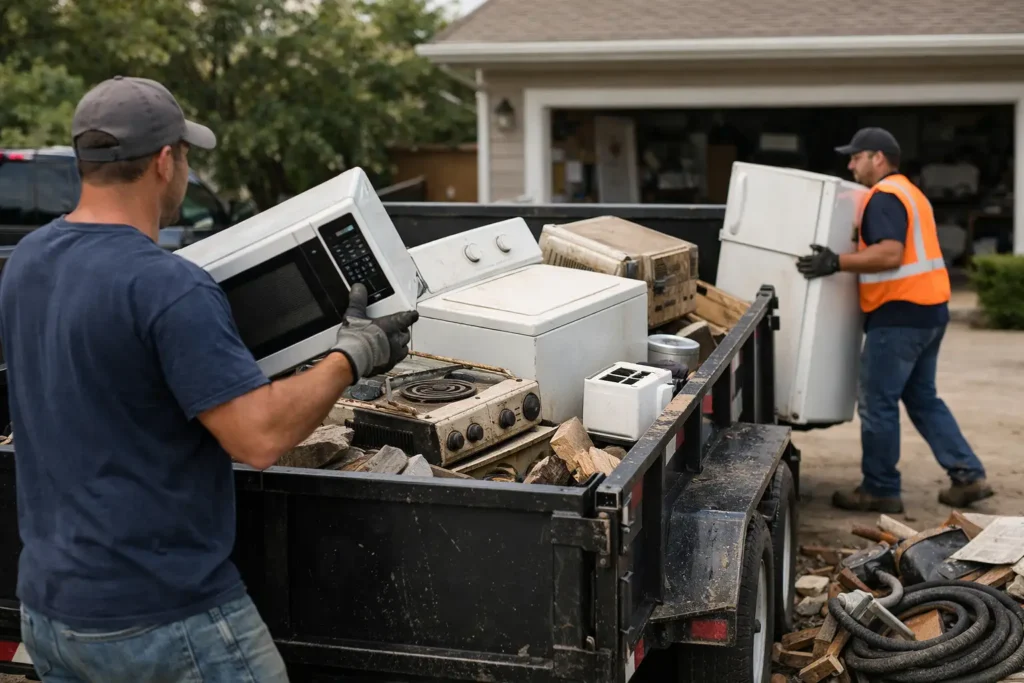
That old fridge in the garage usually turns into a problem right when you need the space back. Same goes for a dead washer in a laundry room, an outdated stove during a remodel, or a freezer left behind in a rental. If you’re figuring out how to remove old appliances, the biggest mistake is treating it like a simple two-person lift. It usually is not.
Appliance removal goes sideways for three reasons. The unit is heavier than expected, access is tighter than it looked, or nobody planned for what happens after it gets to the driveway. A clean removal starts before anyone grabs a dolly.
How to remove old appliances without damaging the property
First, figure out exactly what you’re moving and what it takes to disconnect it. A basic electric dryer is one thing. A built-in wall oven, a gas range, or a refrigerator with a water line is another. The more connections involved, the less this becomes a hauling job and the more it becomes a careful removal.
Start by clearing the path. Measure doorways, hallways, stair landings, and the appliance itself. Don’t guess. Handles, doors, and trim can turn a unit that should fit into one that jams halfway out. In real houses, the problem is often not the front door. It’s the tight turn coming out of a laundry room, the lip at the garage step, or hardwood floors that get scratched when the load shifts.
Unplug the appliance if it’s electric and make sure it’s fully disconnected before moving it. Refrigerators should be emptied, shelves removed if needed, and the unit defrosted in advance. Washers need the water shut off, supply hoses removed, and the drum secured if you’re moving it a long distance. Dryers need the vent line disconnected. If the appliance is connected to gas, stop there and bring in the right qualified help for disconnection before hauling starts.
Once it’s disconnected, protect the house before protecting the appliance. Most old appliances are headed out for disposal or recycling anyway. Your walls, doors, and floors matter more than keeping a dented stove in perfect shape. Use floor protection where needed, pad tight corners, and keep one person spotting the move the whole time.
The right way to move heavy appliances
The safest answer is simple: use the right equipment. Appliance dollies with straps, moving blankets, gloves with grip, and sliders for certain floor types all make a difference. Trying to muscle a refrigerator out by hand is how people tweak their back, tear flooring, or crack a door frame.
Weight distribution matters more than most people think. Refrigerators and freezers can feel top-heavy. Washers are dense and awkward. Older units are sometimes heavier than new ones, especially if they’ve still got water trapped inside or extra internal components. A crew that moves these regularly will usually tilt, strap, and control the load instead of trying to dead-lift it.
Stairs change the whole job. If an appliance is upstairs, in a basement, or on a split-level landing, you need a real plan. That’s where a straightforward removal can become risky fast. At that point, paying for experienced hauling is often the cheaper move compared to repairing drywall, railings, or an injured back.
Appliances that usually need extra caution
Some units are more trouble than they look. Refrigerators need to stay upright as much as possible. Front-load washers are bulky and heavy in all the wrong ways. Built-in microwaves and wall ovens may be fastened into cabinetry. Old freezers in garages sometimes have been sitting so long that rusted feet or swollen flooring make them harder to move than expected.
If the appliance is boxed in by cabinets, countertops, or a narrow utility closet, slow down. That is usually where trim gets torn up and people start forcing the move.
Disposal is where most people get stuck
Knowing how to remove old appliances is only half the job. The other half is knowing where they can actually go.
You usually have a few options. Utility companies or retailers sometimes offer haul-away when replacing an old unit. Local recycling or transfer facilities may accept appliances, but rules vary by item and by location. Some require appointments. Some charge fees. Some won’t take certain appliances unless they’ve been properly processed first.
That last part matters with refrigerators, freezers, air conditioners, and other cooling appliances. They can contain regulated refrigerants and can’t just be dumped like scrap metal. Disposal rules are there for a reason, and this is one category where winging it can waste a lot of time.
For homeowners, the easiest route is often scheduling a junk removal crew that handles appliance hauling and knows the local disposal process. For contractors and property managers, that option usually makes even more sense when the job site already has enough moving parts.
When curbside pickup works and when it doesn’t
Sometimes curbside bulk pickup is enough. If the appliance is already outside, disconnected, and your local service accepts it, great. But that only works when all the prep is done and the pickup rules line up.
It usually falls apart when the unit is still inside, access is difficult, or there are multiple items involved. A landlord turning a unit after move-out doesn’t want a dead fridge sitting at the curb for days. A contractor wrapping up a kitchen remodel usually needs the old range, dishwasher, and debris gone on schedule so the next trade can keep moving.
DIY removal vs hiring a hauling crew
This comes down to risk, time, and how complicated the setup is.
DIY can make sense if the appliance is already disconnected, on the ground floor, near an easy exit, and you’re dealing with one straightforward item. Even then, you still need a vehicle that can legally and safely transport it, plus a disposal plan that won’t get rejected at the gate.
Hiring a crew makes more sense when the appliance is heavy, built in, upstairs, part of a larger cleanout, or sitting in a property that needs to stay presentable. It also makes sense when time matters. Property managers, real estate teams, and contractors usually aren’t looking to spend half a day wrestling a freezer through a narrow hallway and then waiting in line at a disposal site.
A good hauling crew is really buying you control. The job gets scheduled, the item gets removed, and the property stays cleaner and more protected in the process. That’s the real value.
How to remove old appliances during remodels and property cleanouts
This is where planning pays off. Appliance removal during a remodel is easier before finish surfaces go in and before crews start stacking materials in every available path. If you’re replacing kitchen appliances, pull the old units at the right stage so they don’t block flooring, cabinet work, or paint touch-ups.
For rental turnovers and estate cleanouts, appliance hauling is rarely the only thing happening. There may be furniture, bagged trash, old shelving, or garage debris mixed in. In those cases, bundling removal work is usually the cleaner approach. One crew, one pickup window, less stop-and-start.
In Northeast Georgia, that kind of job comes up a lot in move-outs, inherited properties, and renovation prep. A local operator like Drop Zone CleanUp sees the same pattern over and over – what starts as one old appliance often turns into clearing enough space for the next phase of work.
A few mistakes worth avoiding
People try to save time by keeping doors on the appliance, leaving loose shelves inside, or dragging a unit across finished floors. That usually creates more work, not less. Another common one is failing to confirm disposal rules before loading up. Nothing wastes an afternoon faster than hauling a refrigerator somewhere that won’t accept it.
And if the appliance still has active utility connections, do not force the issue. A damaged line behind a washer or range will cost more than the removal ever would.
What a smooth appliance removal actually looks like
The cleanest jobs are not dramatic. The unit is identified correctly. It gets disconnected the right way. The path is measured and protected. The crew uses the right dolly, controls the load, gets it out without beating up the property, and takes it to the proper disposal or recycling outlet.
That sounds simple because it should be. But simple does not mean casual. Old appliances are awkward, heavy, and easy to underestimate.
If you’re dealing with one in a garage, a rental, a remodel, or a full property cleanout, the goal is not just to get rid of it. The goal is to get it out cleanly so the rest of the job can keep moving. That’s usually the difference between a quick win and a half-day headache.