

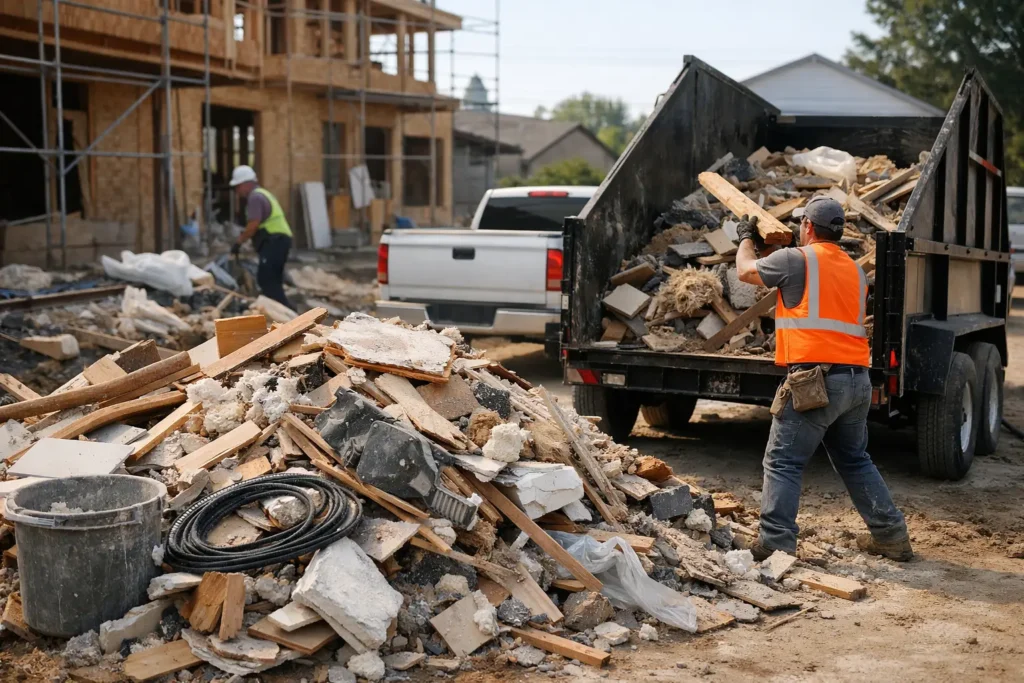
A jobsite can be on schedule, fully staffed, and still get bogged down by one simple problem – too much debris in the wrong place. That is where a solid construction site debris guide matters. Scrap lumber, busted drywall, packaging, concrete chunks, shingles, and old fixtures all eat up space fast. If nobody has a plan for that mess, production slows down, safety gets worse, and the site starts working against the crew instead of for them.
This is not just about keeping things looking tidy. Debris control affects access, labor efficiency, inspections, and how fast the next trade can get in and work. On a small remodel, poor cleanup might cost a few hours. On a larger build or turnover, it can throw off the whole sequence.
Why debris becomes a real jobsite problem
Most debris issues start small. A few torn-out cabinets sit in the driveway longer than planned. Drywall scraps pile up in a hallway. Pallets and cardboard stack near the garage because nobody wants to stop and deal with them mid-task. By the end of the week, the site feels tighter, slower, and harder to manage.
The problem is not just volume. It is timing and placement. A clean pile of material in a designated area is manageable. Random debris spread across work zones is where trouble starts. Crews spend more time walking around it, moving it twice, or stopping to clear paths just to keep working.
There is also the safety side. Nails in lumber, broken tile, jagged metal, loose plastic, and concrete rubble can all create trip hazards or puncture risks. If the site has active foot traffic from crews, owners, inspectors, or tenants, disorder becomes more than an inconvenience.
A practical construction site debris guide starts with sorting
Not every load of debris should be handled the same way. One of the easiest ways to keep a site under control is to sort material based on how the job is actually moving.
Clean wood, mixed construction debris, concrete or masonry, metal, cardboard, and bulky tear-out items usually need different handling. That does not mean every site needs a perfect recycling station with labels everywhere. It means you need enough separation to avoid turning a manageable cleanup into a tangled mixed pile that takes longer to haul.
For example, a bathroom remodel might only need one area for general demo debris and one spot for heavier material like tile and mortar. A full property renovation may need separate staging for framing scrap, drywall, flooring, cabinets, and appliance removal. The right setup depends on site size, access, and how often material is being cleared.
If you mix everything from day one, removal gets slower and more expensive in labor. If you sort too aggressively on a tight site, you can waste space and create extra handling. That is why the best system is the one your crew will actually follow.
Where debris should go during the job
A lot of cleanup problems come from poor staging, not lazy crews. If there is no clear place to put debris, people will set it wherever they can. That usually means near the entry, beside a trailer, under a porch, or in the path of the next phase.
Pick one primary debris zone and make it obvious. It should be easy to reach, out of active work lanes, and practical for loading. On residential jobs, that may be one side of the driveway or a protected area near the curb. On tighter sites, it may need to be behind the structure or in a specific corner of the lot.
The key is keeping haul-out in mind from the start. If debris gets stacked in a fenced backyard with no equipment access, somebody is carrying all of it out by hand later. That may be fine for a light cleanout. It is not fine for concrete, roofing tear-off, or a heavy interior demo.
Think through the exit path early. The best debris pile is not just out of the way. It is also easy to remove without rehandling every piece.
The debris types that usually slow down removal
Some materials are simple. Others create drag fast.
Drywall and lumber stack up quickly but are usually straightforward if kept reasonably dry and consolidated. Cardboard and packaging look harmless, but they spread everywhere and eat up room if nobody breaks them down. Flooring tear-out can be deceptively heavy, especially when it includes underlayment, tile, or glued material.
Concrete, brick, block, and dirt-heavy debris are a different animal. They load slower, weigh more than most people expect, and can damage surfaces if dragged carelessly across driveways or finished areas. Roofing debris also takes some planning because shingles, underlayment, nails, and flashing create messy mixed loads.
Then there are bulky removals that throw off the whole site plan. Old vanities, tubs, cabinets, counters, doors, windows, and fixtures take up awkward space. They are not always the heaviest items, but they block movement and make a site look more chaotic than it really is.
When to schedule debris removal
This is where a lot of jobs either stay smooth or start backing up.
If you wait until the very end of the project, debris becomes a major event instead of routine maintenance. That can work on a very small job with limited tear-out. On most active sites, though, cleanup needs to happen in phases.
Early removal makes sense after heavy demo, after framing or material delivery cleanup, and before final trade work starts tightening up the space. You do not want painters, flooring crews, trim installers, or punch-list teams working around old demo piles that should have been gone days ago.
There is a trade-off. Removing too often can interrupt workflow if the timing is poor. Waiting too long can choke access and slow multiple trades at once. The sweet spot is usually tied to project milestones, not the calendar. Once debris starts affecting movement, staging, or safety, it is time.
What contractors and property managers should watch for
On contractor jobs, the biggest issue is usually lost efficiency. Guys should be building, installing, or finishing work. If skilled labor is spending half the morning dragging junk to one corner, that is money leaking out of the job.
For property managers and landlords, the concern is often turnover speed. Debris left behind after a renovation, unit cleanout, or eviction can delay cleaning, repairs, leasing photos, and showings. The longer junk sits, the longer the property stays stuck between phases.
Access matters too. Occupied properties, shared driveways, apartment complexes, and retail locations all need a little more control. You cannot just throw material anywhere and deal with it later. You need a plan that keeps entrances clear, limits disruption, and gets the mess gone without creating another one.
Choosing help for construction debris cleanup
If you are bringing in outside help, look for a crew that understands jobsite flow, not just hauling. There is a difference between someone picking up a random junk pile and someone handling active construction debris without slowing the project down.
Good debris support means clear communication on what is being removed, where access is, how loading will happen, and what the crew needs to avoid. It also means showing up ready for real material, not acting surprised when the pile includes concrete, torn-out cabinetry, or mixed demo from multiple rooms.
Licensed and insured matters here. So does straightforward pricing. Nobody wants a vague quote that turns into a back-and-forth argument once the truck is on site. One call should get the scope understood, the timing set, and the mess handled with no extra drama.
In Northeast Georgia, that practical approach matters on everything from residential remodels to contractor cleanups and property turnovers. Drop Zone CleanUp works best when the goal is simple – clear the debris, protect the schedule, and keep the job moving.
A construction site debris guide is really a workflow guide
The best cleanup plans are not fancy. They are clear. Decide where debris goes, separate the big categories that matter, remove heavy or bulky material before it takes over the site, and do not wait until the final day if the mess is already slowing people down.
A clean jobsite does not mean spotless every hour. It means controlled enough that crews can work, materials can move, and nobody is wasting time fighting through junk piles to finish the job.
If debris is starting to control the site, the fix is usually simple. Get it out before it becomes the next delay.