

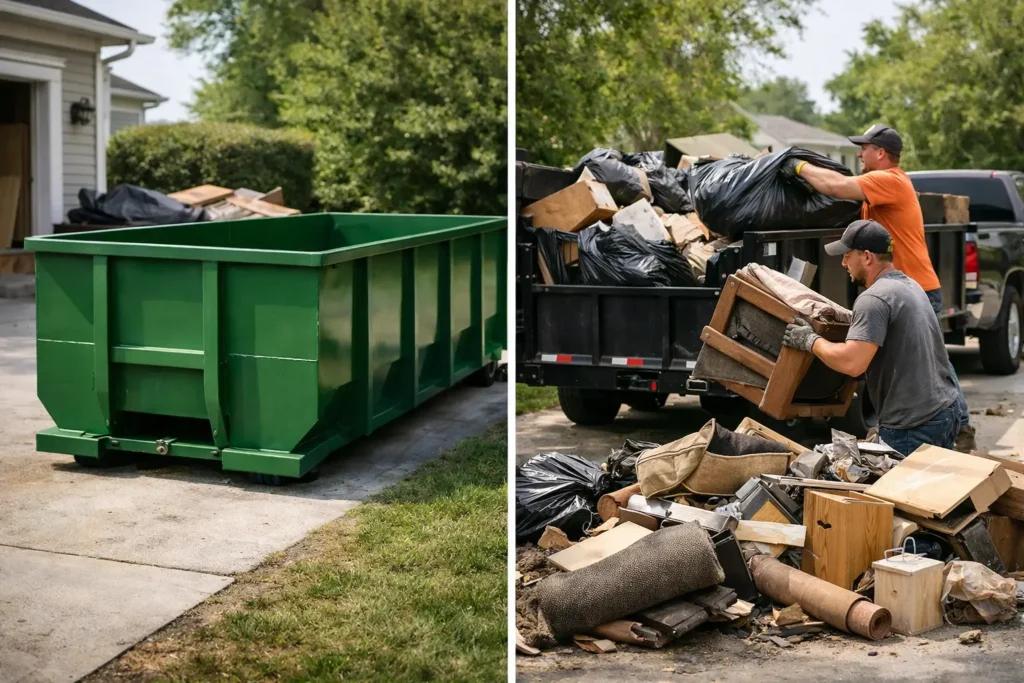
You’ve got a pile building up fast – maybe it’s demo debris in the driveway, furniture from a move-out, or storm mess stacked along the curb. That’s usually when the real question shows up: dumpster rental vs junk removal. Both solve a cleanup problem, but they work very differently once the job starts.
A lot of people assume the cheaper-looking option is automatically the better one. On site, that’s usually not how it plays out. The right choice depends on who’s doing the loading, how long the debris will sit there, what kind of material you’re dealing with, and whether the cleanup needs to happen around an active home, rental turnover, or job site.
Dumpster rental vs junk removal: the basic difference
A dumpster rental gives you a container that gets dropped off and picked up later. You load it yourself. It stays on the property for a set window, which can help if debris is being generated over several days.
Junk removal is a labor service. A crew shows up, loads the material, hauls it off, and clears the space. You’re not managing the container, the loading, or the final pickup. For a lot of homeowners and property managers, that difference matters more than they expect.
On paper, both remove junk. In practice, one is more like equipment rental and the other is hands-on cleanup support.
When a dumpster makes sense
There are jobs where a dumpster is the right tool. If you’re doing a renovation over several days, tearing out cabinets room by room, or cleaning out a property in stages, having a container on site can be useful. You can toss debris as you go and keep the work moving without waiting on a haul-off crew each time a pile forms.
Contractors sometimes prefer that setup when they already have labor on site. If your crew is demoing a bathroom, replacing flooring, or handling a light remodel, loading a dumpster may fit the workflow just fine. Same goes for property owners doing their own cleanout over a weekend.
But there’s a catch. A dumpster only works well when you have the room for it, the surface can handle it, and someone is actually going to keep feeding it. If the debris sits outside the can because the workday got busy, you haven’t solved much.
Another issue is load efficiency. On a mixed cleanup, people often waste space without realizing it. Furniture, brush, busted shelving, bagged trash, and loose construction debris don’t stack neatly unless somebody is paying attention. That can turn one container into two faster than expected.
When junk removal is the better call
Junk removal usually makes more sense when the priority is speed, labor, or access.
If the material is inside the house, in a garage, behind a shed, upstairs in an apartment, or spread across a property, a dumpster doesn’t remove the hard part. You still have to carry everything out. That’s where a hauling crew earns its keep.
This is especially true on estate cleanouts, eviction cleanouts, move-outs, and hoarder situations. Those jobs rarely involve one neat pile sitting in the driveway. They involve furniture in three rooms, bagged debris in a hallway, broken appliances out back, and a timeline that doesn’t leave much room for trial and error.
The same applies to many contractor jobs. If you’ve got debris piled up after a demo, but your crew needs to stay focused on the build, it often makes more sense to have a removal crew come in, load it fast, and clear the site. One call, one crew, no container sitting around while the project shifts to the next phase.
The labor question matters more than most people think
A lot of the dumpster rental vs junk removal decision comes down to one simple question: who is doing the loading?
If it’s you, your family, your maintenance tech, or your job crew, be realistic about the time that takes. Carrying out a mattress is one thing. Clearing a packed garage, busted deck boards, old fencing, concrete chunks, or wet storm debris is another.
Loading is where cleanup jobs drag out. People underestimate stairs, long walks to the driveway, awkward items, sharp debris, weather, and fatigue. They also forget that somebody still has to sweep up the leftovers and deal with what didn’t fit.
With junk removal, the labor is built into the service. That changes the math. It may cost more upfront in some situations, but it can save a full day of work, reduce property damage risk, and keep your own crew from getting pulled off higher-value tasks.
Space, placement, and property conditions
Not every property is set up well for a dumpster. Tight driveways, sloped lots, HOA restrictions, soft ground, parked vehicles, and limited street access can all make placement harder than expected.
That’s common around established neighborhoods, rental homes, and smaller commercial sites. A container may technically fit, but now you’ve blocked garage access, taken up needed parking, or created a headache for tenants and trades.
Junk removal is often cleaner in those situations because the crew arrives, loads, and leaves. There’s no container sitting on the property for days. No guessing whether rain will soak everything before pickup. No worrying about other people tossing extra junk into it overnight.
That last part is more common than people think, especially when a dumpster is visible from the street.
Debris type changes the answer
Not all junk behaves the same. A house full of old furniture is different from a pile of roofing shingles. Yard waste is different from drywall and lumber. A hot tub removal is different from bagged household trash.
For bulky items and mixed loads, junk removal tends to be more efficient because the crew can sort, lift, break down, and load with a plan. For ongoing renovation debris generated over time, a dumpster may work better if your team is actively filling it every day.
Heavy materials need extra thought. Concrete, brick, dirt-heavy debris, and dense construction waste can create weight issues fast. On those jobs, the smartest option is usually the one that matches the material, access, and loading plan – not just the one that sounds simpler on the phone.
Timing is another deciding factor
If you want everything gone now, junk removal is usually the better fit. The crew arrives, removes the material, and the space is usable again the same day.
If the project is unfolding in phases, a dumpster can help by staying on site while debris builds. That said, the timeline only helps if someone is steadily loading it. If the project stalls or the cleanup gets pushed back, the container can become one more thing to manage.
Property managers run into this often. A turnover may start as a simple trash-out, then turn into appliance removal, furniture haul-off, and scattered debris around the exterior. In that case, a hands-on cleanup crew is often more flexible than a container sitting in the lot waiting to be filled.
Cost is not just the invoice
People naturally compare price first, but the better comparison is total effort.
A dumpster might look like the lower-cost option if you only compare the delivery and pickup charge. But if you factor in labor, site downtime, extra trips carrying material out, possible overfill issues, and the chance that you need another container because the first one was loaded poorly, the savings can disappear.
Junk removal usually prices in the labor, hauling, and disposal together. That makes it easier to look at the whole task instead of just the container. For homeowners, that often brings peace of mind. For contractors and landlords, it can keep the schedule tighter, which usually matters more than shaving a little off one line item.
This is where straightforward pricing helps. You want to know what the job includes, what kind of debris changes the number, and whether the crew is handling all the lifting. No guessing game.
So which one should you choose?
If you’ve got time, labor, space for a container, and debris that will build over several days, a dumpster can be a practical fit. If you need the material gone quickly, don’t want to handle the lifting, or you’re dealing with scattered, bulky, or inside-the-property cleanup, junk removal is usually the better move.
For a lot of jobs, the deciding factor is friction. Which option gets the mess out without slowing down the project, tying up your crew, or turning cleanup into a second job? That’s usually the right answer.
Around homes, rentals, and active job sites in Northeast Georgia, the cleanest solution is often the one that removes both the debris and the hassle. If the pile is the problem, great. If the labor, timing, and access are the real problem, that’s worth solving too.
A good cleanup plan should make the next step easier, whether that next step is listing the property, getting tenants in, finishing a build, or just getting your garage back.