

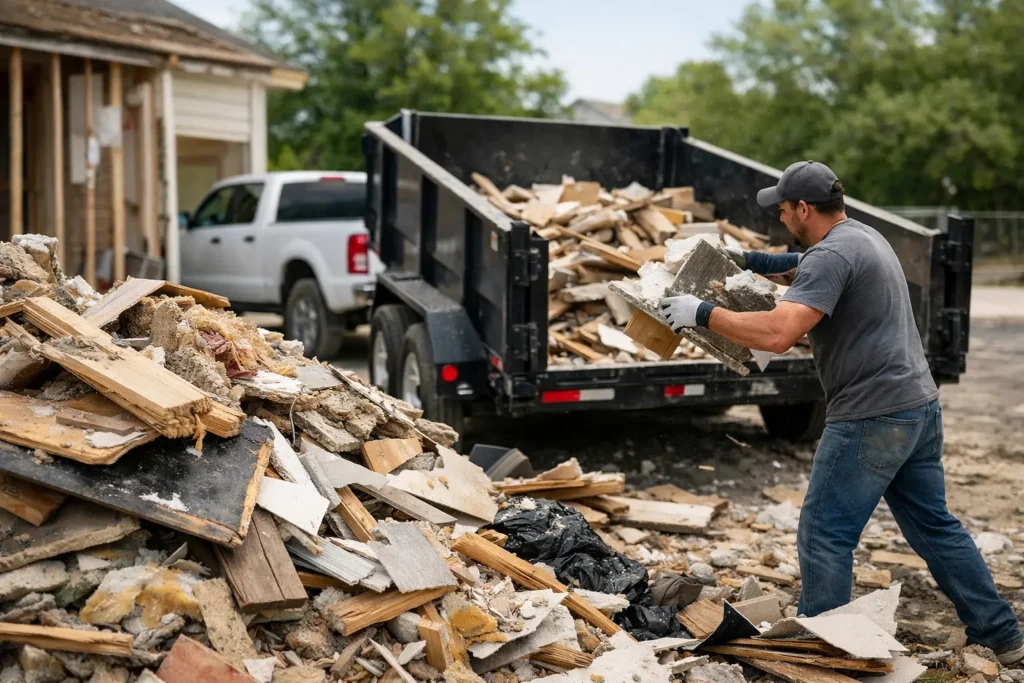
A remodel can look productive right up until the scrap pile starts taking over the driveway, the lot, or the edge of the slab. Broken drywall, cut lumber, old cabinets, roofing tear-off, busted tile, and packaging stack up fast. That is where what is construction debris removal becomes a practical question, not just a definition.
Construction debris removal is the process of clearing out waste and leftover material from a building, renovation, demolition, or repair job so the site stays safe, workable, and ready for the next phase. It is not just hauling junk away. On a real jobsite, it is part cleanup, part logistics, and part keeping the project from getting bogged down by its own mess.
What Is Construction Debris Removal on a Real Jobsite?
On paper, construction debris removal sounds simple. Debris gets loaded, hauled off, and disposed of properly. In the field, it is more hands-on than that.
A good debris removal crew deals with material where it actually sits – inside framed rooms, behind a house, in a muddy side yard, around active trades, or piled next to a dumpster that is already overflowing. Sometimes the work is one final sweep after the build is done. Other times it is ongoing support so crews can keep moving without wasting labor on cleanup runs.
For contractors, that matters because every hour a carpenter, roofer, or flooring crew spends dragging debris is an hour they are not building. For homeowners, it matters because a renovation site gets frustrating fast when waste starts blocking access, damaging the yard, or creating hazards around the property.
What Counts as Construction Debris?
Construction debris is the leftover material created during building, remodeling, teardown, or property improvement work. That can include wood scraps, drywall, concrete chunks, tile, flooring, old fixtures, insulation, siding, fencing, cabinets, roofing shingles, pallets, and general jobsite trash.
There is also a difference between clean material and mixed debris. A stack of broken concrete from a patio removal is one thing. A pile of wood, cardboard, plastic wrap, nails, and busted shelving mixed together is another. The removal approach depends on what the material is, how heavy it is, and where it is located.
This is why pricing and scheduling can vary from one job to the next. Ten cubic yards of light packaging waste is not the same workload as ten cubic yards of wet drywall and tile pulled from a bathroom gut job.
New construction vs. renovation debris
New construction debris usually leans toward packaging, cutoffs, pallets, scrap lumber, drywall pieces, and general trade waste. Renovation debris is often heavier, dirtier, and less predictable. It may include torn-out cabinets, plaster, tile, vanities, old flooring, doors, and demolition leftovers from inside occupied spaces.
That difference affects labor, access, and disposal. A new build on an open lot is usually easier to service than a tight remodel in an established neighborhood where material has to be carried out carefully.
Clean concrete and heavy material
Concrete, brick, block, dirt, and similar heavy debris need special attention. Weight adds up fast. A small pile can be far heavier than it looks, and that changes how it gets loaded and hauled.
Heavy debris often calls for a different plan than general cleanup. If a contractor tears out a sidewalk, a patio, or a small slab section, the hauling side of the job matters just as much as the demo itself.
Why Construction Debris Removal Matters
Debris removal is not just about appearance. It affects safety, workflow, scheduling, and how professional the site looks to owners, inspectors, tenants, or the next trade walking in.
Loose debris creates trip hazards. Sharp material and exposed fasteners create injury risks. Overloaded trash areas slow down crews and make it harder to stage tools and supplies. On residential jobs, debris can also tear up driveways, block garages, and leave homeowners feeling like the project is out of control.
There is also the schedule issue. Jobs stay cleaner when debris gets removed at the right points, not after the fact. Framing scrap can be cleared before mechanical work starts. Demo debris can be hauled before new material arrives. Final cleanup can happen before punch-out, not during it.
That is the difference between a site that keeps moving and one that constantly feels one step behind.
How the Removal Process Usually Works
Most construction debris removal jobs start with figuring out three things: what the material is, how much there is, and how hard it is to reach.
If the debris is already staged in one pile near the curb or driveway, the job is straightforward. If it is spread across multiple floors, tucked in a backyard, or mixed with items that are staying, the labor side goes up. Access is always part of the equation.
Once the scope is clear, the crew loads the material, protects surrounding areas as needed, and hauls it for proper disposal or processing. On some jobs, that means a one-time removal after demolition. On others, it means recurring pickups through different phases of the project.
A dependable crew should also communicate clearly about what they are taking, when they are arriving, and what the job actually includes. That sounds basic, but on active projects, clear communication saves headaches.
When to schedule debris hauling
There is no one answer here. It depends on the job.
For a homeowner doing one bathroom remodel, a single pickup near the end might be enough. For a contractor managing a full interior renovation, debris may need to be removed in stages so the next trade has room to work. For property managers turning units, fast removal can be the difference between repair work starting on time or getting pushed back.
The best timing is usually before the pile becomes a bottleneck.
DIY Cleanup vs. Hiring a Debris Removal Crew
Some small jobs can be handled in-house. If you replaced a few cabinets and have a light pile of debris with easy access, loading it yourself may be reasonable.
But once debris gets heavy, bulky, sharp, or spread out, the hidden cost of DIY cleanup shows up. It takes truck space, labor, dump runs, loading time, disposal coordination, and cleanup after the haul. If your own crew is doing the loading, you are paying skilled workers to do non-billable hauling work.
For homeowners, the issue is usually convenience and risk. For contractors and property managers, it is usually time. A professional debris removal crew helps keep labor focused on the actual job.
What to Look for in a Construction Debris Removal Service
This is not a service where flashy language matters much. The basics matter.
You want a crew that shows up when scheduled, communicates clearly, is licensed and insured, and understands jobsite realities. They should be able to handle mixed debris, heavy material, and access challenges without creating a bigger mess in the process.
Straightforward pricing matters too. Construction cleanup jobs can change once the crew sees the actual material, so clear scope upfront helps avoid confusion. It also helps to work with a company that understands the difference between a homeowner cleanup and an active contractor job where timing and site flow matter more than anything else.
In Northeast Georgia, that usually means working with a local operator who understands how residential jobs, rental cleanouts, and contractor schedules actually work in the field. Drop Zone CleanUp fits that lane because the focus is simple – show up, load it out, and help keep the project moving.
Common Situations Where Debris Removal Helps Most
The most obvious use is after demolition, but that is not the only time it helps.
It is useful after roof tear-offs, flooring replacement, deck removal, garage cleanouts tied to renovations, tenant move-outs with repair debris, storm-related property cleanup, and concrete or masonry breakup. It also helps on jobs where dumpsters are not practical, space is tight, or the debris volume does not justify leaving a container onsite.
There is also a middle ground many people miss. Some projects do not need full-time site cleanup, but they do need a reliable crew to come in at key points and clear the mess before it snowballs. That kind of support keeps sites cleaner without overcomplicating the job.
The Bottom Line on What Is Construction Debris Removal
If you strip away the industry wording, construction debris removal is jobsite support. It keeps waste from slowing down the work, cluttering the property, or creating unnecessary hazards. Sometimes that means one haul at the end. Sometimes it means regular cleanup so the build stays on track.
The main thing is this: debris does not remove itself, and waiting too long usually makes the job harder. If the pile is growing faster than your crew can deal with it, that is usually your sign to bring in help and clear the path for the next step.