

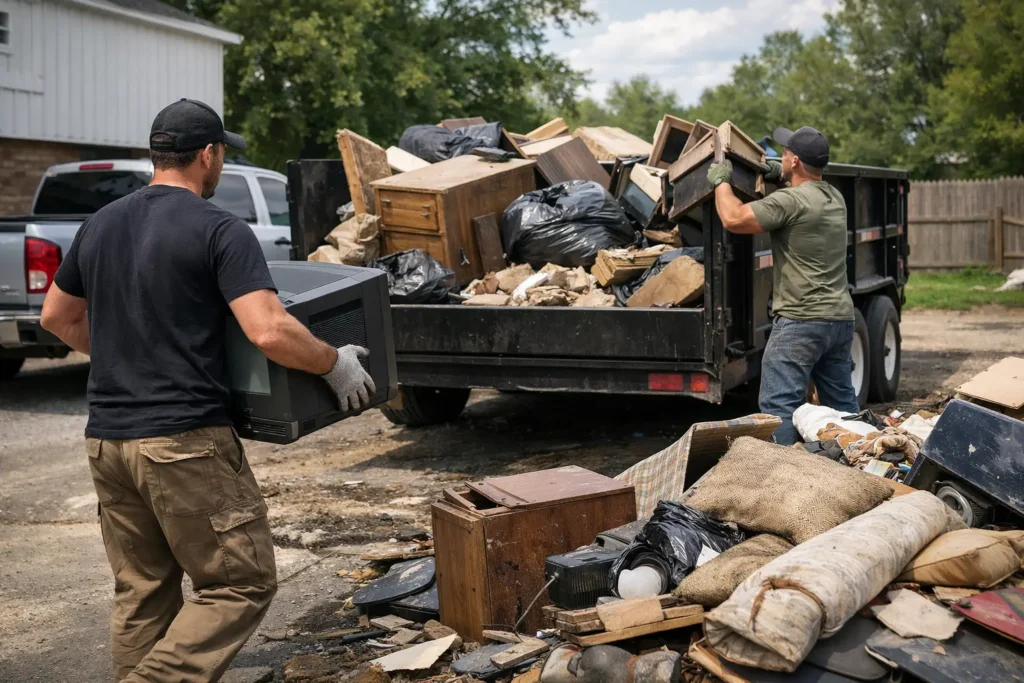
You usually know the moment clean out junk removal becomes the right call. It is when the garage is no longer a garage. When the rental turn has old mattresses, busted furniture, bags of trash, and loose debris spread through every room. When a renovation is moving forward, but the pile in the driveway is starting to slow the whole job down.
At that point, this is not really about junk. It is about access, time, safety, and getting the property back under control.
What clean out junk removal actually covers
A lot of people hear the phrase and think it means hauling off a couch and a few boxes. Sometimes it does. More often, a real cleanout is bigger than that.
Clean out junk removal can mean emptying a garage that has been packed for years. It can mean clearing a rental after a tenant leaves furniture, food waste, clothes, and broken household items behind. It can mean loading out brush, fencing, flooring, cabinets, drywall, and general debris after a property improvement project. It can also mean dealing with heavy items that most people do not want to wrestle with on their own, like appliances, hot tubs, or old playsets.
The common thread is simple. The material is too much for normal trash pickup, too bulky for one person to handle, or too scattered and time-consuming for the property owner to manage without burning an entire weekend.
Why people wait too long to schedule it
Most cleanouts start with good intentions. People think they will sort it out room by room. Contractors figure they will get to the debris pile at the end of the week. Property managers hope the next vendor can work around the mess.
Then the pile grows.
Once that happens, the job usually gets slower and more expensive in ways that are easy to miss. Crews lose staging space. Walk paths get blocked. A turnover drags out because flooring installers, painters, or maintenance techs are working around junk instead of moving straight through the unit. Homeowners put off projects because the clutter has become its own project.
That is where a professional crew helps. Not because hauling is glamorous, but because removing the obstacle often gets everything else moving again.
Clean out junk removal for homeowners
For homeowners, the biggest value is usually time and relief. A cleanout is often tied to something already stressful – a move, an estate transition, a major decluttering effort, storm debris, or the aftermath of a renovation.
The work sounds simple until you are standing in front of it. One old sectional turns into a sectional, two dressers, six contractor bags, scrap wood, paint-splattered shelving, and a garage corner full of things nobody has touched in ten years. Then you still have to figure out loading, lifting, disposal, and how many dump runs it will take.
A good cleanout crew changes that equation. The job gets handled in one coordinated push. Heavy items get moved without beating up the walls or driveway. Loose debris gets loaded out instead of left behind in a dozen little piles. You get usable space back without having to manage every step yourself.
This matters even more when the property has stairs, tight hallways, a long driveway, or oversized items that are awkward to break down. Those details are usually what turn a do-it-yourself cleanout into a multi-day headache.
Where it matters most for landlords and property managers
Turnovers are where delays get expensive fast. If a tenant leaves a unit full of junk, every day that mess sits there can affect cleaning, repairs, painting, flooring, and showings.
In that situation, clean out junk removal is not a convenience service. It is part of getting the asset back online.
The best approach is usually speed and clarity. What is staying, what is going, how fast can the unit be emptied, and whether there are bulky items that need extra labor or breakdown on site. That could be bedroom furniture, broken appliances, bagged trash, patio debris, or piles left in a garage or storage room.
Property managers also need predictability. They do not want vague arrival windows, unclear scope, or surprise add-ons after the truck is loaded. They need a crew that can show up, assess the material, clear it efficiently, and communicate like people who understand that the cleanout is one piece of a much bigger turnover schedule.
Contractors need hauling that keeps the site moving
On active jobsites, debris has a way of creeping into every part of the workflow. Demo scraps, packaging, drywall, concrete chunks, fencing, cabinets, flooring tear-out, and busted materials all take up room. Once staging areas disappear, production slows down.
That is why clean out junk removal matters to contractors. It keeps the site workable.
This is not always about a full property cleanout. Sometimes it is a focused debris pull to clear the driveway, garage, side yard, or interior work zone so the next trade can come in. Sometimes it is the final push after the main work is done and all the leftover material needs to be loaded out before a walkthrough.
The right hauling crew understands that timing matters. If debris removal shows up late, every trade behind it feels that delay. If the loadout is sloppy, nails, splinters, and loose material get left behind and create more cleanup for somebody else. Good support work is supposed to reduce friction, not add to it.
What to expect from a professional cleanout crew
A solid cleanout should feel straightforward. The crew looks at the material, gives clear pricing, confirms what is being removed, and gets to work.
That sounds obvious, but it matters. Cleanouts can get messy fast if there is confusion about volume, access, labor, or what items are included. A packed shed is different from curbside pickup. A third-floor apartment with bulky furniture is different from a ground-level garage. A property with scattered debris across the yard takes a different approach than a single pile by the driveway.
That is why honest quoting matters. So does insured, professional handling. If people are carrying heavy appliances through a home or loading demolition debris from an active site, you want a crew that treats the work like real work.
You should also expect basic respect for the property. That means not dragging materials carelessly, not leaving a trail of debris behind, and not creating a bigger mess while clearing the first one.
When a full cleanout is better than piecemeal hauling
Sometimes people try to chip away at a large mess one small load at a time. That can work if the amount is limited and nobody is in a rush.
But if the property needs to be sold, rented, repaired, or used again soon, piecemeal hauling usually creates its own problems. The mess hangs around too long. You still lose space. You still deal with repeated loading and disposal trips. And the property never quite gets back to a clean starting point.
A full cleanout makes more sense when the volume is already significant, when multiple rooms or outdoor areas are involved, or when the material includes heavy and awkward items mixed with loose trash and debris. In those cases, one organized removal is often the cleaner, faster way to reset the site.
That is especially true with estate cleanouts, eviction cleanouts, post-renovation debris, and properties where the clutter has built up over time. Those jobs usually need labor, hauling, and practical on-site decision making, not just a truck.
A few things that make the job go smoother
If you are scheduling clean out junk removal, a little prep helps. If there are items that must stay, set them aside or mark them clearly. If gate codes, lockbox access, or tenant coordination are involved, handle that ahead of time. If the jobsite has active trades, make sure the hauling window fits the work schedule.
Photos also help with quoting, especially if the material is spread across several areas or includes heavy items. The more accurate the picture, the fewer surprises there are when the crew arrives.
That said, not every cleanout can be perfectly staged in advance. Some jobs are chaotic by nature. That is normal. The important thing is having a crew that can adapt, communicate clearly, and keep the job moving.
In Northeast Georgia, that is usually what people are really paying for. Not just a truck and a dump run, but a dependable crew that shows up ready to clear the problem without turning it into a bigger one. Drop Zone CleanUp works in that lane every day.
If the mess is already affecting access, slowing down a project, or keeping a property from the next step, waiting rarely improves it. Getting it cleared does.