

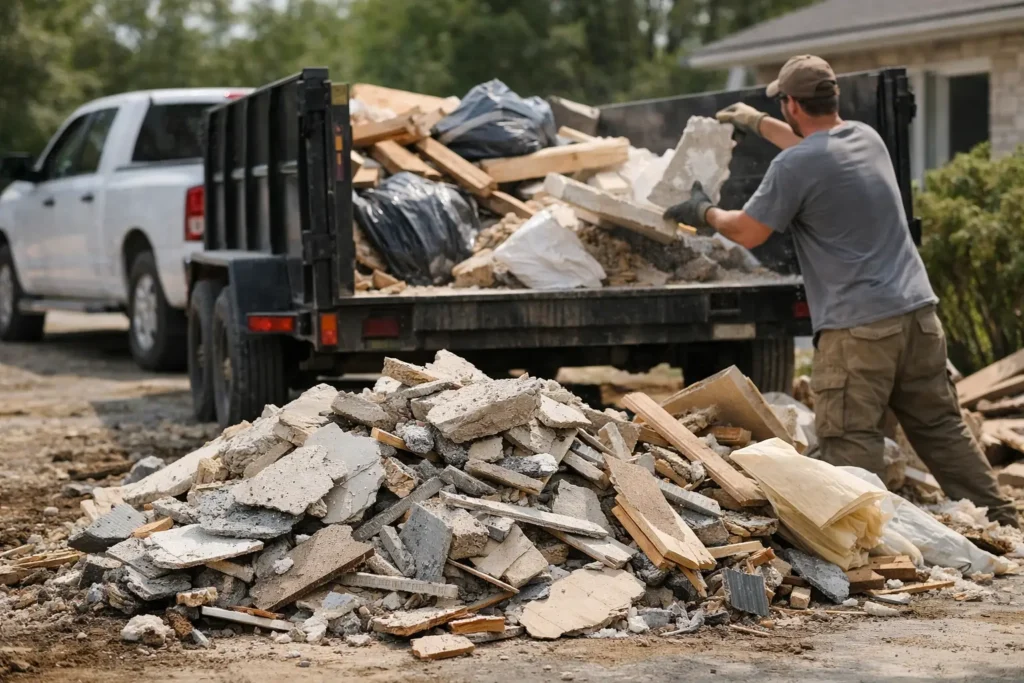
A remodel gets messy fast. One day it is a small bathroom tear-out, and the next day you have busted drywall, tile shards, trim, lumber offcuts, cardboard, and a growing pile blocking the driveway or jobsite access. That is usually when the real question hits – how do you dispose of construction debris without slowing the whole project down?
The short answer is this: you sort it, separate what can be recycled, follow local disposal rules, and make sure the material leaves the site safely. The right approach depends on what you are tearing out, how much debris you have, and whether you are working at a house, rental property, or active jobsite.
How do you dispose of construction debris without creating a bigger problem?
The biggest mistake is treating all debris like ordinary trash. Construction waste is mixed, heavy, awkward, and sometimes sharp. If you start tossing everything into random bags or stacking it wherever there is open space, the site gets unsafe and cleanup gets more expensive.
A better move is to deal with debris in categories as it comes off the job. Drywall, lumber, metal, concrete, brick, cabinets, flooring, roofing material, and packaging do not always go to the same place. Some can be recycled. Some need a specific transfer station or landfill. Some materials are light but bulky, while others are compact and extremely heavy.
That matters because disposal is not just about where it ends up. It also affects labor, loading time, vehicle weight, and whether your crew can keep moving without working around a pile of junk all day.
Start by separating the debris
If you are handling a cleanup yourself, separation makes the whole process easier. It does not have to be perfect, but it should be intentional.
Clean lumber, scrap metal, cardboard, and some masonry materials are often worth keeping separate from mixed debris. Broken drywall, insulation, treated wood, and old flooring usually end up in the mixed construction waste category. Concrete is its own issue because it gets heavy in a hurry. A few chunks may not seem like much until you try to load them all at once and realize you are pushing weight limits.
On a real job, this usually looks simple. Keep one pile for wood, one for metal, one for masonry or concrete, and one for everything else that cannot be easily recovered. Even that basic level of sorting can save time and keep disposal from turning into a second project.
Common debris types and what to watch for
Drywall breaks down into dust and crumbs fast, so bagging or contained loading helps keep the site cleaner. Lumber takes up more room than people expect, especially when trim, sheathing, and framing scraps are mixed together. Tile and brick are hard on gloves, truck beds, and ankles if they are left scattered.
Cabinets, vanities, doors, and fixtures are bulky but usually easy to load if you get them out before they are smashed into smaller debris. Cardboard and packaging should be pulled early because it is light, clean, and easy to get rid of when it is not soaked or buried under demolition waste.
Know when the debris is too much for regular trash pickup
A couple contractor bags from a small repair job might fit within normal household disposal rules. Most renovation debris does not. Regular curbside pickup is not built for busted tile, sections of drywall, concrete chunks, or piles of framing lumber.
Even if your local trash service allows some construction material, there are usually limits on weight, bundle size, or total volume. Ignore that, and the pile stays put.
That is where many homeowners and landlords lose time. They assume they can set it out little by little, but the project wraps up long before the debris is gone. Then you are left with a side yard full of demo waste or a rental turnover delayed because the junk is still there.
Haul it yourself or bring in a debris removal crew?
It depends on volume, material, access, and how valuable your time is.
If you have a pickup truck, a small amount of light debris, and a clear idea of where it needs to go, self-hauling can work. But most people underestimate the number of trips. One bathroom demo can mean multiple loads when tile, backer board, vanity pieces, and drywall all add up. Add stairs, tight parking, or wet weather, and it gets old quickly.
For contractors, the decision usually comes down to labor and schedule. If your crew is spending half a day loading debris instead of framing, installing, or finishing, cleanup is now eating into production. On occupied properties, debris removal also affects safety and appearance. Homeowners notice when trash piles sit too long.
A dedicated hauling crew makes more sense when the debris is heavy, mixed, or blocking the job. It is especially useful on renovation work, property cleanouts, flooring tear-outs, deck removals, and small demolition projects where the waste stream changes by the hour.
How do you dispose of construction debris like concrete, brick, and block?
Heavy debris needs a different plan than general jobsite trash. Concrete, brick, mortar, and cinder block can overload a truck fast if they are not loaded correctly. They also cannot always be mixed with general debris at the same rate or destination.
If you have only a few pieces, you may be able to take them to a facility that accepts clean masonry waste. If you have a patio tear-out, retaining wall removal, or chunks from a slab demo, it usually makes sense to keep that material in its own pile and move it with the right equipment.
This is where people get into trouble trying to save a step. They mix heavy material with everything else, overfill the load, and create a hauling problem that is harder than the original cleanup. On bigger jobs, separating concrete from wood and drywall is not just cleaner. It is safer and more efficient.
Watch the jobsite, not just the dump load
Disposal starts before the debris leaves. If the pile is in the wrong place, your project slows down.
Keep debris away from walk paths, entrances, parked vehicles, and material staging areas. Do not let loose nails, glass, tile shards, or splintered lumber collect around where people are working. On residential jobs, this matters even more because kids, pets, tenants, and owners may still be moving through the property.
Good cleanup is part of keeping a site under control. A neat pile is faster to load than a scattered mess. A contained debris area also helps you see what is actually there, which matters when you are trying to estimate labor, truck space, or disposal weight.
Recycling helps, but only when it is practical
People hear recycle and assume every jobsite should be sorted into perfect categories. Sometimes that works. Sometimes it does not.
Metal is usually worth separating because it is easy to identify and simple to keep clean. Cardboard is the same if it stays dry. Clean concrete and brick can sometimes be taken to the right facility. But once materials are mixed, soaked, painted, nailed together, or packed with dust and insulation, recycling gets less realistic.
The practical answer is to recover the obvious materials and move the rest out efficiently. A cleanup plan should fit the job, not create extra handling just to feel organized.
What homeowners, landlords, and contractors each need to think about
Homeowners usually care about protecting the driveway, yard, and garage from turning into a dump zone. They also want the debris gone without having to figure out local disposal rules on the fly.
Landlords and property managers are usually dealing with turnover pressure. The debris needs to clear fast so repairs, cleaning, and leasing can happen next. Every extra day that junk sits there can push the schedule.
Contractors look at debris differently. For them, it is a production issue. If demo waste is stacked in the wrong place, trades get boxed out, materials cannot be delivered cleanly, and the site looks behind even when work is moving. That is why a reliable haul-off plan matters more than people think.
In Northeast Georgia, where a lot of work happens on occupied homes, rentals, and tight residential lots, cleanup has to be practical. One crew handling the removal cleanly and on schedule can keep the whole project from dragging.
When to call for help
If the debris pile is growing faster than you can move it, you are already at the point where help makes sense. The same goes for heavy material, mixed loads, limited access, or any cleanup tied to a project deadline.
A good debris hauling crew should be able to look at the site, tell you what is involved, and get it handled without a lot of back-and-forth. That matters when you have a contractor waiting on space, a property that needs to be turned, or a homeowner who is tired of staring at a busted-up pile of renovation waste.
Drop Zone CleanUp handles this kind of work the way it should be handled – clear communication, straightforward pricing, and removal that keeps the property or job moving.
The best way to dispose of construction debris is the one that keeps the site safe, keeps the project on track, and gets the mess out before it becomes tomorrow’s delay.